Facing a Drug Test? Read This First
Legal cannabis use and workplace drug policies do not always align. Knowing the rules that apply to your job can help you avoid surprises when a screening is required.
Receiving a notice for a workplace drug test can be an incredibly stressful experience, even for individuals residing in states where cannabis is fully legal for adult use. Because federal law, private corporate policies, and state-level protections frequently clash, navigating an upcoming drug screening requires a firm understanding of current regulatory frameworks.
Whether you are facing a pre-employment screening, a random workplace check, or a post-accident evaluation, this legal guide outlines the essential regulatory rules, detection windows, and consumer rights you must know before walking into the laboratory.
1. Understand the Regulatory Framework: Federal vs. State Law
The most critical legal reality to understand is the divide between federal jurisdiction and state-level legalization.
- Safety-Sensitive and Federal Positions: If your employment falls under federal mandates—such as the Department of Transportation (DOT), aviation, nuclear power, or military contracting—state laws do not protect you. Under federal guidelines, cannabis remains classified as a controlled substance. Federal screenings exclusively follow the Substance Abuse and Mental Health Services Administration (SAMHSA) guidelines, meaning testing positive for THC metabolites can result in disqualification from employment, removal from safety-sensitive duties, or other disciplinary actions, regardless of state cannabis laws.
- Private Employment and State Protections: For non-federal, private-sector jobs, state laws govern your rights. Several states, including New York, California, and New Jersey, have passed progressive legislation that prohibits employers from discriminating against workers or firing them solely for off-duty, off-premises cannabis use. However, these laws typically include exceptions for active on-the-job impairment, or positions that involve heavy machinery and public safety.
2. Know What is Actually Being Tested: Screening Thresholds
Workplace drug screenings do not test for active THC (the compound that causes a psychoactive high). Instead, standard urine tests screen for THC-COOH, a non-psychoactive fat-soluble metabolite that the human body produces after processing cannabis.
Regulatory bodies utilize specific cutoff levels (measured in nanograms per milliliter, or ng/mL) to eliminate false positives from passive secondhand exposure.
- The Initial Screen: The standard initial immunoassay test typically uses a cutoff threshold of 50 ng/mL. If your sample registers below this level, it is marked as negative.
- The Confirmation Test: If the sample ticks above 50 ng/mL, it is automatically forwarded for a highly precise Gas Chromatography-Mass Spectrometry (GC-MS) or LC-MS confirmation test. The regulatory cutoff for this secondary confirmation drops to 15 ng/mL, specifically isolating the targeted THC-COOH metabolite.
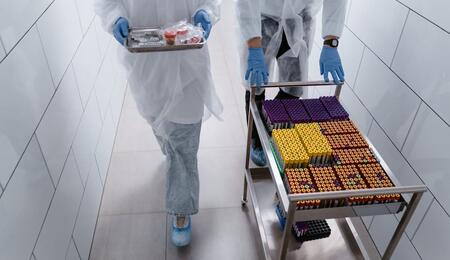
Modern drug testing laboratories do far more than simply analyze a sample; they also verify specimen integrity to detect dilution, substitution, and other forms of tampering. Video source: Easy DOT Physicals, YouTube
3. Real Detection Windows vs. Internet Myths
The internet is saturated with unscientific myths promising immediate detoxification through flush kits, synthetic samples, or heavy dilution.
From a regulatory and laboratory standpoint, attempting to alter a sample is incredibly risky. Modern laboratories meticulously screen for specimen validity by checking temperature, pH levels, specific gravity, and creatinine levels.
Depending on employer policy and applicable regulations, a sample that is flagged as “diluted” or “adulterated” may be treated as a refusal to test or trigger additional testing requirements.
Instead of relying on dangerous quick-fixes, it is vital to understand actual biological clearance windows, which vary heavily based on usage frequency:
- Infrequent Users (1–3 times a week): Typically clear the 50 ng/mL threshold within 3 to 5 days.
- Moderate Users (4–5 times a week): Generally require 7 to 15 days to fall below detection limits.
- Heavy, Daily Consumers: Because THC-COOH binds to fat tissue, chronic daily users may retain detectable levels for 30 days or longer, depending on metabolism and body mass index (BMI).
However, keep in mind that these are only general estimates.
Factors such as body composition, metabolism, product potency, frequency and method of consumption, hydration levels, and individual biology can all influence how long THC metabolites remain detectable.
4. Your Rights Before the Screening Begins
Before entering the testing facility, you have explicit legal protections designed to ensure chain-of-custody integrity and medical privacy:
- Disclosure of Prescription Medications: If you take legally prescribed pharmaceuticals (such as specific anti-anxiety medications, ADHD stimulants, or painkillers) that could trigger an initial cross-reaction or false positive, you have the right to declare them.
- The Medical Review Officer (MRO) Buffer: In professional corporate screenings, your results go directly to a Medical Review Officer—a licensed physician who reviews the lab data. If your sample returns a positive result for a prescribed substance, the MRO will contact you directly to verify your legal prescription. If verified, the MRO is legally bound to report the overall test result to your employer as a clean “Negative.”
- Right to a Split-Sample Retest: Under federal and most standard corporate protocols, your urine sample is split into two separate bottles (Bottle A and Bottle B). If Bottle A returns a confirmed positive, you have a legal window (typically 72 hours) to formally demand that Bottle B be sent to an entirely independent, certified laboratory for an independent retest.
A drug test can feel intimidating, but being informed goes a long way. Familiarize yourself with your local employment protections, understand the requirements that apply to your role, and don’t hesitate to exercise your rights throughout the testing and review process.
Read more from Soft Secrets:
- How Long Does Cannabis Stay in Your System?
- The ‘Standard THC Unit’: Science Reveals New Low-Risk Limits
- How Do You Best Get Cannabis Out of Your System?
Disclaimer: This article is provided strictly for informational and educational purposes and it does not constitute formal legal advice. Employment drug testing laws are subject to change at federal, state, and municipal levels. If you are facing adverse employment actions, termination, or legal disputes regarding a workplace drug screening, consult with a qualified, licensed employment attorney in your specific jurisdiction to evaluate your options.
S
Stephen Andrews