Does Marijuana Actually Make for a Better Musician? Here’s What the Science Shows

For many musicians, cannabis has been part of the creative process, however, inspiration still needs talent, practice, and persistence.
The historical connection between cannabis culture and musical innovation is undeniable. From Louis Armstrong praising “gage” as an essential creative assistant in the early days of jazz, to Brian Wilson leveraging it during the composition of Pet Sounds, the plant has long been romanticized as the ultimate sonic catalyst.
But does cannabis actually make someone a better musician, or does it simply make the creative process feel more inspiring? While countless artists have credited marijuana with helping them write songs or hear music differently, research suggests the answer is more nuanced than either enthusiasts or skeptics might expect.
The list of musicians who have praised the green goes on and on. From Bob Dylan, The Beatles, OutKast, Alanis Morrissette, Willie Nelson, Snoop Dogg, Jimi Hendrix, and Bob Marley, artists from vastly different musical backgrounds have described cannabis as a valuable creative companion.
While cannabis certainly doesn’t affect every musician in the same way, it can influence how the brain processes ideas, emotions, and sound. Under the right circumstances, those effects may help explain why so many musicians have felt that marijuana changes—not necessarily improves, but certainly reshapes—the creative experience.
Quieting the “Inner Editor”
One reason cannabis is often associated with creativity lies in how THC interacts with the brain’s endocannabinoid system.
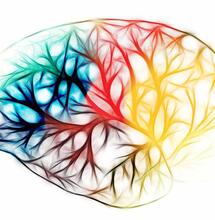
When THC binds to CB1 receptors in the frontal cortex, it triggers a temporary increase in dopamine activity. This can alter decision-making and self-monitoring, effectively quieting the hyper-critical “inner editor” that often second-guesses every creative idea.
For performers struggling with stage fright or songwriters staring at a blank page, this shift may reduce self-consciousness and make experimentation feel more natural. Instead of immediately judging whether every note or lyric is good enough, musicians may become more willing to follow unexpected ideas wherever they lead.
That doesn’t necessarily mean those ideas are objectively better, but it can certainly make the creative process feel freer and less constrained.
Why Ideas Sometimes Flow More Easily
One of the most studied aspects of creativity is divergent thinking—the ability to generate multiple ideas or connect concepts that don’t obviously belong together.
Researchers at University College London found that cannabis may temporarily make it easier for the brain to form unexpected associations, a phenomenon known as semantic priming. In other words, ideas that would normally seem unrelated can suddenly feel naturally connected.
For musicians, that might mean an unusual chord progression suddenly feels worth trying, or a lyrical metaphor appears almost effortlessly. Improvisation wanders into places the musician wouldn’t normally explore.
The effect isn’t unlimited, though. Research consistently shows that while lower to moderate doses of THC may encourage this kind of flexible thinking in some people, consuming too much often has the opposite effect. Higher doses can impair working memory, coordination, concentration, and timing—the very abilities musicians rely on to perform or produce music well.
Even musicians who embraced cannabis recognized its limits. As Bob Marley once put it, “Too much of one thing good for nothing. If you have too much herb, it might hurt you.”
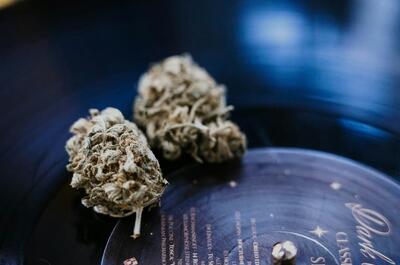
Some musicians say cannabis helps them hear familiar songs with “fresh ears,” revealing details that often go unnoticed.
Why Music Can Sound Different When You’re High
Anyone who has listened to a favorite album while high has probably experienced this feeling. Tiny details in the production suddenly stand out. A background vocal, a subtle bass movement, or a percussion layer you’ve heard dozens of times before suddenly feels brand new.
Researchers believe THC temporarily reduces the brain’s tendency to filter familiar sensory information. Instead of treating repetitive sounds as background noise, the brain pays closer attention to them, making individual layers of a song feel more vivid and emotionally engaging.
For musicians and producers, this altered perspective can occasionally be useful. Hearing a rough mix with what feels like “fresh ears” may reveal details that previously went unnoticed, helping guide creative decisions during recording or production.
Of course, this heightened appreciation is also subjective. Feeling more emotionally connected to a piece of music doesn’t necessarily mean your perception has become more accurate—it simply means the listening experience has changed.
So, Does It Actually Make You a Better Musician?
The short answer is both yes and no.
Whether cannabis makes someone a “better” musician depends entirely on what part of musicianship you’re talking about. It may help some people become more open to experimentation, reduce self-consciousness, or experience music from a different perspective. What it doesn’t do is create talent, replace practice, or magically improve technical ability.
Writing memorable songs, mastering an instrument, or delivering a compelling performance still depends on years of dedication, discipline, and experience.
Or as Peter Webster observed in his influential essay Marijuana and Music: “It is not that cannabis consciousness itself ‘produces’ ideas that are creative, or that valuable ideas come during the experience or because of it, but that cumulatively, over time, the kind of perception and thinking initiated by cannabis leads one to be generally more open to alternative and perhaps adventurous ways of seeing things which enrich normal consciousness.”
Cannabis may occasionally help open a creative door or break through a mental block, but walking through that door still requires skill, persistence, and plenty of practice. In the end, it may help unlock ideas, but it can never replace musicianship.
Read more from Soft Secrets:
S
Soft Secrets