Should People Be Allowed To Smoke Up At Legal Retail Marijuana Shops?

As weed becomes legal to buy in more places, a key question remains: should it also be legal to use at dispensaries?
Imagine arriving in a legal cannabis state as a tourist. You walk into a licensed dispensary, browse a menu of carefully regulated products, make your purchase, and step back outside. Then reality sets in. You realize that you can’t consume your purchase in public.
Most hotels prohibit smoking or vaping. Rental properties often ban cannabis use. Consuming inside a vehicle is illegal, and many visitors don’t have access to a private residence.
For millions of cannabis consumers, particularly tourists, this creates a legal paradox: cannabis may be legal to buy, but finding a legal place to use it can be surprisingly difficult.
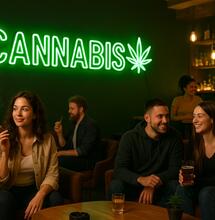
This dilemma has fueled a growing debate across North America: should licensed cannabis retailers be allowed to offer on-site consumption lounges where adults can legally consume the products they purchase?
A Fair Problem for Cannabis Tourists
As legalization expands, cannabis tourism has become a significant economic driver in many regions.
Visitors sometimes travel to legal destinations to experience the local cannabis culture and try locally produced cannabis products, much like tourists visit wine regions, breweries, or cigar lounges. Yet unlike alcohol, which can be consumed in bars, restaurants, and other licensed venues, cannabis consumption remains largely confined to private spaces.
This leaves many tourists with limited options.
Cities that attract large numbers of visitors often face a choice between enforcing public-consumption bans or creating designated spaces where adults can consume responsibly under regulated conditions.
Supporters argue that consumption lounges provide a practical solution while helping reduce public consumption complaints.
Why Some Regulators Support On-Site Consumption
Advocates of cannabis lounges often point to several potential benefits.
Safer Consumption Environments
A regulated consumption space allows adults to use cannabis in a controlled setting rather than in parks, sidewalks, parking lots, or hotel rooms where use may violate local rules.
Licensed venues can enforce age restrictions, monitor behavior, and provide staff trained in responsible consumption practices.
Reducing Public Consumption
One of the most common complaints in legalized markets involves cannabis use occurring in public areas.
Designated lounges could channel consumption away from public spaces and into venues specifically designed for that purpose.
This mirrors how bars and pubs provide a designated environment for alcohol consumption rather than encouraging drinking in public spaces.
Supporting Local Economies
Cannabis lounges may create new business opportunities for retailers, hospitality operators, and tourism industries.
In mature cannabis markets, many businesses see social consumption spaces as the next phase of legalization, creating experiences that extend beyond simple retail sales.
For destinations that rely heavily on tourism, cannabis lounges could become an additional attraction for adult visitors.
The Challenges and Concerns
Despite growing interest, regulators continue to face several significant concerns.
Impaired Driving Risks
Perhaps the most frequently cited concern is impaired driving.
Critics worry that allowing consumption at retail locations could increase the number of consumers driving shortly after using cannabis.
To address this issue, jurisdictions considering social consumption licenses often explore transportation partnerships, ride-share incentives, or restrictions on lounge operations.
Workplace Safety and Ventilation
Smoking cannabis indoors presents challenges similar to those associated with tobacco smoking.
Ventilation systems, employee exposure, air-quality standards, and public-health regulations all become important considerations.
Many jurisdictions require sophisticated filtration systems or limit consumption methods to vaping and edible products.
Community Opposition
Not every community welcomes cannabis consumption venues.
Residents may express concerns about odors, neighborhood character, increased tourism traffic, or potential impacts on nearby businesses.
As a result, many legalization frameworks give municipalities the authority to approve, restrict, or prohibit cannabis lounges within their jurisdictions.
Regulatory Complexity
Allowing on-site consumption involves far more than simply adding a few chairs, dimming the lights, and creating a lounge-like atmosphere inside a dispensary.
Behind the scenes, regulators must establish detailed rules governing security, age verification, ventilation, staff training, emergency response procedures, product handling, and zoning compliance. They must also determine how consumption areas will be separated from retail spaces and what safeguards are needed to promote responsible use.
Building a regulatory system that satisfies consumers, businesses, and local communities is rarely straightforward and can take years to fully implement.
Cannabis has long been part of social and cultural traditions around the world. Today, debates over consumption lounges and public-use policies reflect the next stage in the plant’s evolving relationship with society.
How Cannabis Lounges Compare to Bars
Supporters often compare cannabis lounges to bars, but the comparison is not perfect.
Alcohol and cannabis affect consumers differently, and measuring impairment remains a more complex issue for cannabis.
Unlike alcohol service establishments, cannabis lounges generally cannot rely on a universally accepted intoxication metric comparable to blood alcohol concentration limits.
This creates additional challenges for operators attempting to identify overconsumption and promote responsible use.
At the same time, proponents argue that legal adults should have access to designated consumption spaces for cannabis just as they do for alcohol.
What Legal Markets Have Learned
Several jurisdictions have already experimented with various forms of social cannabis consumption.
Some allow stand-alone cannabis lounges. Others permit consumption in designated areas adjacent to dispensaries. A few jurisdictions restrict consumption to private cannabis clubs or temporary event licenses.
The results have been mixed but generally demonstrate strong consumer demand, particularly among tourists or everyone else who do not have access to private spaces.
The key lesson emerging from these experiments is that legalization does not end with retail sales. People also need practical, legal places to use the products they purchase.
The Future of Social Cannabis Consumption
As cannabis legalization continues to evolve, the debate is shifting from whether adults should be allowed to purchase cannabis to where they should be allowed to consume it.
For many policymakers, social consumption spaces represent a logical next step in shaping the regulated cannabis market. For others, concerns about public health, impaired driving, and community impacts remain significant obstacles.
What seems increasingly clear is that legal cannabis markets face a fundamental question: if adults can legally buy cannabis, should they also have a choice of legal places to enjoy it?
The answer may offer guidance for the next chapter of cannabis legalization around the world.
Read more from Soft Secrets:
S
Soft Secrets