The War on Drugs: A History of Bias, Backlash, and the Shift to Reform
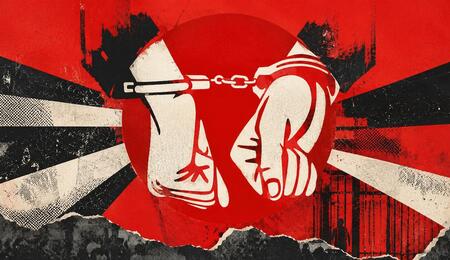
The War on Drugs reshaped American society through decades of aggressive enforcement, mass incarceration, and political rhetoric.
The contemporary legal cannabis industry is rapidly expanding, with modern dispensaries generating fortunes in the legal adult-use market. However, this lavish commercial landscape stands in stark contrast to decades of punitive law enforcement. To truly understand the current state of cannabis policy, one must examine the roots of drug prohibition in the United States—a history heavily marked by systemic bias and political utility rather than scientific assessment.
The Roots of Early Drug Prohibition
Before the era of federal bans, substances like marijuana, opium, coca, and various psychedelics were used globally for thousands of years for medicinal and spiritual purposes. The shift toward criminalization in the late 19th and early 20th centuries was rarely driven by public health data. Instead, it targeted specific marginalized communities:
- The 1870s: The earliest anti-opium ordinances were specifically aimed at Chinese immigrants.
- The Early 1900s: The first wave of anti-cocaine laws explicitly targeted Black men in the American South.
- The 1910s and 1920s: The earliest anti-marijuana laws, enacted primarily in the Midwest and Southwest, were designed to police and control Mexican migrants and Mexican Americans.
This historical framework established a precedent where drug enforcement disproportionately impacted communities of color—a trend that persists in law enforcement practices today.
The Nixon Era and the Weaponization of Prohibition
The modern “War on Drugs” is widely traced to President Richard Nixon’s June 1971 declaration that drug abuse was “public enemy number one.” During this era of profound social upheaval, youth rebellion, and anti-war dissent, the federal government almost completely halted scientific research into the medical safety and risks of using substances.
Decades later, former Nixon domestic policy advisor John Ehrlichman claimed the policy was designed in part to target the administration’s political opponents, including anti-war activists and Black Americans. By heavily criminalizing marijuana and heroin, the administration successfully disrupted these communities, vilified their leaders, and dominated the nightly news cycle.
The Shafer Commission Rejection
In 1970, cannabis was temporarily placed into Schedule I of the Controlled Substances Act—the most restrictive tier reserved for drugs with a high potential for abuse and no accepted medical use. Nixon appointed a commission led by Pennsylvania Governor Raymond Shafer to formally review the plant. In 1972, the Shafer Commission unanimously recommended decriminalizing the personal possession and private use of marijuana. Nixon ignored the findings.
Despite the federal stance, state-level momentum grew. Between 1973 and 1977, eleven US states chose to decriminalize personal possession. President Jimmy Carter even campaigned on a decriminalization platform. However, by the late 1970s, a cultural backlash regarding rising teen usage rates halted federal progress.
The 1980s and 1990s: Zero Tolerance and Mass Incarceration
The drug war escalated dramatically during the presidency of Ronald Reagan. Driven by intense media portrayals of “crack” cocaine, public anxiety skyrocketed. In 1985, only a small fraction of Americans viewed drug abuse as the nation’s most urgent problem; by September 1989, that number peaked at a staggering 64% before quickly plummeting when media attention shifted.
The policy consequences of this era were severe and long-lasting:
- Mass Incarceration: The number of people incarcerated for drug offenses surged from roughly 50,000 in 1980 to more than 400,000 by 1997.
- Just Say No & DARE: First Lady Nancy Reagan spearheaded the “Just Say No” campaign, while Los Angeles Police Chief Daryl Gates founded the DARE program, which expanded nationwide despite its efficacy being questioned.
- Suppression of Harm Reduction: Zero-tolerance political stances blocked the expansion of syringe access programs, severely hindering early public health efforts to curb the spread of HIV/AIDS.
Continuity Through the Clinton Administration
Despite campaigning on promises of a public health-focused approach, President Bill Clinton largely maintained the aggressive enforcement strategies of his predecessors. Notably, his administration rejected recommendations from the US Sentencing Commission to eliminate the severe sentencing disparities between crack and powder cocaine, and maintained federal bans on syringe exchange funding. It was only at the twilight of his presidency that Clinton publicly acknowledged the need to re-examine mass incarceration and reconsider decriminalization.
The Modern Shift: The Pendulum Moves Toward Reform
During the early 2000s under George W. Bush, federal spending on the drug war reached record highs, accompanied by a heavy militarization of domestic law enforcement and a sharp rise in SWAT raids for nonviolent offenses. However, public opinion was shifting permanently.
Prominent political figures began openly discussing past consumption, breaking long-standing taboos. State-level advocacy networks—championed by organizations like the Drug Policy Alliance—successfully decoupled state laws from federal enforcement. Pioneer states like Colorado and Washington legalized adult-use cannabis in 2012, triggering a massive domino effect across the country.
Where the Legal Landscape Stands Today
The evolution of cannabis policy has moved rapidly beyond the zero-tolerance era of the previous century. Today, roughly half of US states have legalized adult-use cannabis, and a significant majority of states protect medical marijuana (MMJ) programs.
On the federal level, the 2018 Farm Bill created a significant shift by legalizing hemp and hemp-derived cannabinoids containing less than 0.3% Delta-9 THC, opening up a substantial secondary market. Furthermore, ongoing federal reviews surrounding the rescheduling effort for cannabis represent the most substantial shift in federal policy since Nixon first established the Controlled Substances Act. While global and federal disparities remain, the modern approach to drug policy is increasingly guided by economic reality, public health data, and social equity rather than political hysteria.
Read more from Soft Secrets:
Disclaimer: This article is intended for journalistic and informational purposes only. It does not constitute legal or medical advice. Always consult local laws and regulations regarding the possession and consumption of cannabis or controlled substances.
S
Soft Secrets