How to Neutralize Cannabis Smoke Odor in Vehicle Cabins
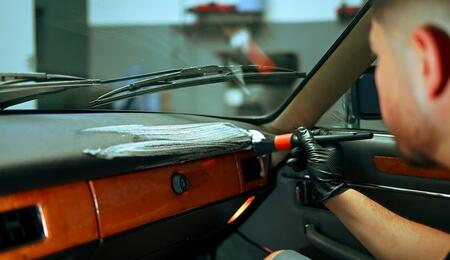
Using a stiff brush and cleaning paste allows you to deep clean the cabin and break up stubborn smoke residue. Photo by Luay Barani on Unsplash
Hot-boxing a car might feel like a classic move in the moment, but your seats and carpet will hold onto that memory far longer than you intended. Trying to cover up the smell with a cardboard tree hanging from the rearview mirror usually just creates a bizarre blend of pine forest and fresh resin.
Cannabis smoke leaves behind volatile organic compounds and persistent resin residues that bind directly to porous interior materials. Because smoke particles penetrate deep into fabric seats, carpets, and air circulation channels, masking agents rarely solve the problem long-term. Clearing out vehicle cabin odor may take a more dedicated approach, particularly after repeated smoking sessions inside. This process can involve mechanical cleaning, dissolving trapped terpene resins, and thorough airflow management.
Step-by-Step Process to Remove Cannabis Odor from Your Vehicle
To really clean out cannabis smoke residue, you have to move past quick surface fixes and tackle the deep material layers.
- Clear and Air Out the Interior: Begin by removing all personal items, floor mats, trash, and loose fabrics from the cabin. Open all vehicle doors and the trunk in a well-ventilated area to allow baseline air exchange before starting deep cleaning.
- Thoroughly Vacuum All Porous Surfaces: Use a vacuum equipped with a HEPA filter and a specialized upholstery attachment. Vacuum seats, carpets, headliners, and trunk space, paying close attention to seams, crevices, and under-seat rails where settled smoke particles collect.
- Treat Cabin Air Filters and Vents: Smoke residue accumulates quickly inside the heating, ventilation, and air conditioning system. Replace the cabin air filter, as an old filter continuously recycles trapped odors back into the interior. Spray a dedicated automotive vent cleaner into the exterior intake vents while running the climate system on full fan speed with external air mode enabled.
- Shampoo Upholstery and Carpets: Apply an enzymatic fabric cleaner or upholstery shampoo specifically formulated to break down organic compounds and oils. Work the cleaner into seat fabrics and carpet fibers using a soft-bristle brush, then draw out excess moisture using a wet-dry vacuum or carpet extractor. For leather seats, use a dedicated leather cleaner followed by a conditioning agent to lift surface oil without damaging the material.
- Clean Hard Surfaces and Glass: Smoke leaves an invisible film on non-porous surfaces. Wipe down the dashboard, door panels, center console, steering wheel, and interior window glass using an interior detailer or a mild vinegar-water solution. Cleaning interior glass is critical, as oily smoke deposits adhere readily to windshields and side windows.
- Utilize Odor Neutralizers or Ozone Treatments: To eliminate lingering deep-seated smells, avoid masking sprays and use localized neutralizers like active charcoal bags or specialized chlorine dioxide foggers. For severe, long-standing odors, an ozone generator treatment executed safely in an empty vehicle will oxidize trapped organic compounds throughout the entire cabin structure.
After spending all that time and energy restoring your vehicle to showroom freshness, you will probably think twice before turning your cabin into a rolling smokehouse again.
Happy cleaning!
Read more from Soft Secrets:
Disclaimer: Operating a vehicle while under the influence of cannabis is illegal and unsafe. Always ensure you are fully sober before driving or operating machinery.
S
Stephen Andrews