Can Police Actually Smell Cannabis in Your Car?

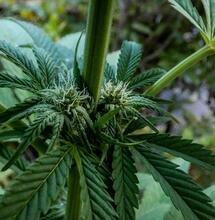
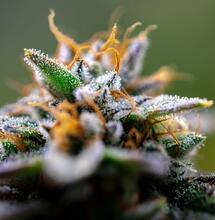
Odor compounds called terpenes give cannabis its distinct smell, but they are also found in lemons, pine trees, and lavender. Nevertheless, this smell might prompt a police search. Photo by Michael Förtsch on Unsplash
Researchers claim that people can’t really smell marijuana packed in, say, double vacuum-sealed bags. Someone might still argue that this depends on the quality of the packaging and the human nose’s ability to identify marijuana.
The chances are that you have wondered about this while cruising on a late-night road trip. With heightened police patrols and changing regional laws, it is a common question: Do law enforcement officers really have the olfactory superpower to smell sealed cannabis through a vehicle’s trunk?
While transporting large quantities of (un)regulated product is never recommended, a fascinating real-world legal case, backed by scientific research, suggests that the notorious “plain smell” justification isn’t always as airtight as officers claim.
The Plain Smell Doctrine Under Scrutiny
Under standard law enforcement guidelines, the “plain smell” doctrine allows police officers to conduct a warrantless vehicle search if they claim to detect the unmistakable odor of marijuana. Looking back, this single assertion has given officers broad authority to search passenger compartments and trunks alike.
However, as cannabis legalization spreads and courts take a closer look at subjective police testimony, smell-based ‘probable cause’ is increasingly being challenged. A notable legal defense strategy put this very doctrine to the test, using scientific evidence to question whether double-sealed cannabis can truly be detected by the human nose.
The Case of the 52 Pounds and a Clever Defense
The story dates back to 2017, when a driver was pulled over for a minor speeding infraction during a routine traffic stop. According to the arresting officer, a member of the highway narcotics squad as well, the strong odor of raw cannabis justified an immediate search of the vehicle. The search uncovered a rubber-banded cash stash and roughly 52 pounds of cannabis packed inside duffel bags.
Instead of accepting the search at face value, the defense team brought in expert reinforcement: Dr. Avery Gilbert, an odor specialist, and Dr. Joseph DiVerdi, a chemist at Colorado State University. The experts examined air samples taken directly from the evidence bags and analyzed terpene concentrations using gas chromatography.
The findings suggested that the terpene levels escaping the packaging were too low for human detection. Backed by this evidence, the defense successfully challenged the reliability of the officer’s “plain smell” claim.
What Science Says About Double Vacuum Sealing
To further investigate these findings, Dr. Gilbert and Dr. DiVerdi designed a controlled experiment examining the limits of human olfaction. Participants were asked to identify cannabis samples concealed using various packaging methods, ranging from standard Ziploc bags and thin produce bags to pop-top canisters and heavy-duty double vacuum-sealed plastic.
While participants readily identified samples in open bowls, Ziploc bags, and produce containers, the double vacuum-sealed samples posed a major hurdle. The study concluded that high-quality, airtight vacuum sealing effectively traps aromatic terpenes, making detection from outside a closed container virtually impossible. Or, as the researchers noted, cannabis packaged in “doubly-vacuum-sealed plastic was correctly identified at rates no different from chance.”
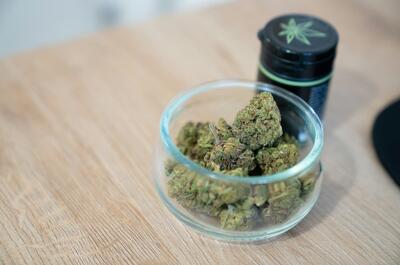
The smell of fresh cannabis actually differs from smoked cannabis because heat naturally alters its terpenes during combustion.
Does the Smell of Cannabis Give Police the Right to Search Your Car?
Beyond unordinary research efforts, it is worth knowing whether an officer can really search your vehicle based solely on smell. As it turns out, this largely depends on your jurisdiction and state laws.
- In States with Strict Legal Prohibition: In regions where cannabis remains completely illegal, the distinct odor of marijuana generally still provides officers with sufficient ‘probable cause’ to conduct a warrantless search under the motor vehicle exception.
- In States with Legal Adult-Use or Medical Frameworks: More and more courts are luckily changing their approach. Because legal cannabis, industrial hemp, and illicit cannabis all actually share the same or similar smell, a growing number of state supreme courts have ruled that odor alone no longer justifies a vehicle search. Officers in these jurisdictions must observe additional indicators of criminal activity, such as visible contraband or active impairment.
- Knowing Your Rights During a Traffic Stop: Regardless of location, drivers are generally not required to consent to voluntary searches. Remaining calm, being polite, and clearly stating that you do not consent to a search can help preserve your constitutional protections if the officer proceeds anyway.
The takeaway here is pretty simple: smell-based searches might be losing their grip in courtrooms, but still, don’t bet your chances on it. Knowing your rights and staying calm is your best bet if you ever find yourself pulled over on the side of the road.
Read more from Soft Secrets:
Disclaimer: Operating a vehicle while under the influence of cannabis is illegal and unsafe. Always ensure you are fully sober before driving or operating machinery.
S
Soft Secrets