Pre-Flowering 101: Identifying & Steering Plant Sex
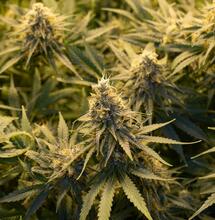
Male cannabis plants initiate flowering earlier and stretch faster than females; identifying their pollen sacs early prevents accidental pollination and crop seeding. Photo by Jave Lr on Pexels
Identifying plant sex early is, it goes without saying, important to proceed with growing cannabis. Removing male plants before they release pollen protects female crops from unwanted pollination, ensuring energy goes toward dense flower and resin production rather than seed formation.
While most growers treat pre-flowering as a simple waiting game, the transition from vegetative growth to flowering is driven by complex internal chemistry. By understanding how environmental conditions control plant hormones, you can encourage strong sex expression, prevent stress-induced hermaphroditism, and spot male cannabis plants well before they pose a contamination risk.
The Chemistry of Cannabis Sex Expression
Cannabis plants are driven by a combination of genetic programming and internal signaling. While genetics establish the underlying blueprint (XX or XY), internal plant hormones dictate how that blueprint is phenotypically expressed.
There are two primary hormone groups that control whether a pre-flower becomes female or male:
- Ethylene (Promotes Female Expression): Ethylene is a plant hormone associated with stress response, fruit ripening, and female floral development. Maintaining conditions that favor balanced ethylene production encourages the formation of female pistillate flowers (bracts with white hairs).
- Gibberellins GA3 (Promotes Male Expression): Gibberellins are hormones responsible for cell elongation and stem stretch. Abnormally elevated levels of active gibberellins can suppress female flower formation and encourage male staminate flowers (pollen sacs).
Environmental Drivers of Hormonal Balance
Hormone levels and plant stress can be actively managed through basic environmental controls:
- Nitrogen Levels: Moderate, balanced nitrogen nutrition supports steady growth and natural ethylene production. Severe nitrogen starvation during early growth increases stress and can trigger ambiguous plants toward intersex traits.
- Temperatures: Moderate daytime temperatures (72°F to 78°F / 22°C to 26°C) favor stable female expression. Sustained heat above 86°F (30°C) spikes gibberellin activity and transpiration stress, raising the risk of intersex pre-flowers.
- Light Quality: Blue-spectrum light typically supports compact internodal spacing and balanced hormone levels, whereas heavy far-red light is prone to trigger a shade-avoidance response that increases stem stretch and gibberellin levels.
Managing the Transition: Photoperiod & Environment
To guide plants smoothly through pre-flowering, it helps to understand when and how pre-flowers actually appear.
Vegetative Pre-Flowers vs. Induced Pre-Flowers
- Vegetative Pre-Flowers (Sexual Maturity): When grown from regular seeds under an 18/6 light cycle, plants usually show early pre-flowers around weeks 4 to 6. This happens naturally once the plant reaches sexual maturity, typically between nodes 4 and 6.
- Induced Pre-Flowers (12/12 Flip): Switching the light cycle to 12 hours of uninterrupted darkness forces the plant into bloom. This is when pre-flowers will rapidly develop and differentiate over the following 7 to 14 days.
Preventing Intersex (Hermaphroditic) Stress Triggers
Intersex traits occur when a genetically female plant produces male pollen sacs due to environmental stress factors. Therefore, to protect your crop, it is important to avoid these critical triggers during the pre-flowering transition:
- Light Leaks: Even minimal light exposure during the 12-hour dark period can disrupt the plant’s photoperiod tracking, confusing hormone signaling and potentially triggering male staminate tissue growth on female plants.
- Severe Root Dry-Backs: Letting the substrate dry out to the point of severe wilting will cause a rapid spike in stress hormones, which disrupts normal female flowering.
- Drastic Temperature Swings: A gap of more than 18°F (10°C) between lights-on and lights-off temperatures can also cause hormonal confusion as well as excessive stem elongation.
Practical Scouting Workflow: Identifying Sex Step-by-Step
Scouting for cannabis pre-flowers requires a close eye and simple tools. Equipment needed includes a 10x or 30x jeweler’s loupe (or a smartphone macro lens) and a targeted inspection routine.
Where to Look
Pre-flowers always appear at the nodes—the junction where the leaf stem (petiole) meets the main stalk or side branch. Start scouting at nodes 4 through 8, as these mature first.
Identifying the Structures
- The Female Pre-Flower:
- Shape: A smooth, pear-shaped or oval structure (the calyx/bract) attached directly to the node.
- Key Marker: One or two fuzzy white hairs (pistils/stigmas) emerging from the tip.
- The Male Pre-Flower:
- Shape: A small, spade-shaped or curved structure resembling a tiny playing-card spade or “crab claw.”
- Key Marker: Raised slightly on a short, tiny stem (pedicel) rather than sitting directly flush against the main stalk. It will not have white hairs.
- Avoiding Common Confusion (Stipules):
- Do not confuse pre-flowers with stipules. Stipules are thin, green, dagger-like growths that point upward at every node on both male and female cannabis plants. Pre-flowers sit tucked directly behind or next to the base of the stipule.
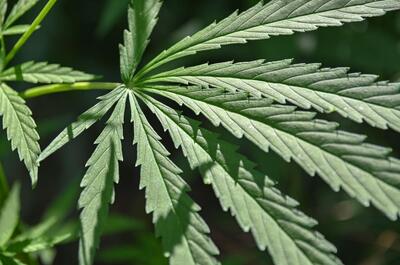
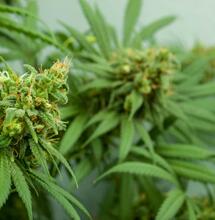
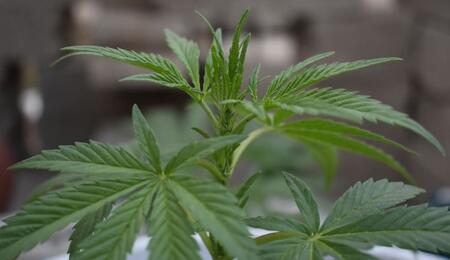
You cannot reliably determine a cannabis plant’s sex by its fan leaves alone, as leaf morphology is dictated by genetics (Sativa vs. Indica dominance) and environmental factors rather than chromosome type. Photo by Adonyi Gábor on Pexels
Frequently Asked Questions (FAQ)
Q: What are the main methods for determining cannabis plant sex, and how do they differ?
A: Growers primarily rely on early visual scouting at the nodes around weeks 4 to 6 or laboratory PCR testing on leaf tissue during the first two weeks of seedling growth. Visual scanning costs nothing but requires patience and canopy space, while laboratory DNA testing offers near-perfect accuracy weeks earlier at a cost per sample, making it the preferred method for large-scale operations.
Q: What are the early visual signs of a hermaphrodite vs. a true male plant?
A: A true male cannabis plant will produce distinct, clustered pollen sacs (often called “balls”) across multiple nodes early in the pre-flower stage. An intersex or hermaphroditic female plant will primarily show clear female calyxes with white pistils, but under stress, it will develop isolated male structures. These can appear as single, stalked pollen sacs tucked into female flower clusters or as bright yellow, banana-shaped anthers (“nanners”) emerging directly from within a female bud site later in flower.
Q: Can environmental stress turn a genetically female plant into a male?
A: No. Stress alone cannot change a plant’s underlying DNA (XX chromosomes stay XX). However, severe stress is most likely to alter phenotypic expression. For instance, when a female cannabis plant experiences extreme stress, its internal ethylene drops and stress-signaling alters, which causes the XX female plant to produce male staminate flowers capable of generating viable pollen.
Q: What is the absolute latest point a male cannabis plant can stay in the room safely?
A: A male plant can safely remain in the grow room until its pollen sacs swell and mature, but waiting that long is an unnecessary risk. Early male pre-flowers appear as tight, solid green structures flush against the stem, but as they mature, they turn yellowish, dangle on thin stalks, and split open to release millions of airborne pollen spores. To keep your crop completely secure, it is best to remove male cannabis plants the moment you confirm their distinct, spade-like shape—long before the sacs ever show signs of swelling or opening.
Read more from Soft Secrets:
Disclaimer: Cannabis cultivation laws vary by region. Readers are advised to check and comply with the regulations applicable in their local jurisdiction before cultivating cannabis.
S
Soft Secrets