7 Quick Tips for Lighting Your Cannabis Grow Room
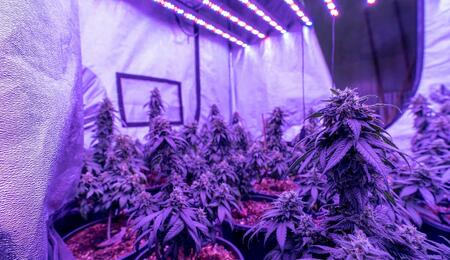
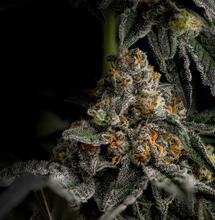
Having a few solid lighting strategies up your sleeve is a game-changer for any grower, especially when dealing with different strain demands. Photo by Crystalweed Cannabis on Unsplash
Lighting is one of the foundational elements of successful cannabis cultivation. Just like messing up your room temperature, humidity, or nutrient delivery, improper lighting can directly lead to compromised plant health and diminished yields. While wild cannabis adapts naturally to seasonal sunlight, growing indoors requires growers to precisely recreate and optimize light delivery.
Whether you are upgrading your setup for the next cannabis grow season or fine-tuning your current environment, these seven tips will help you optimize your lighting strategy for maximum bud production.
1. Match Light Intensity to Growth Stage and Strain Genetics
Photoperiod schedules generally remain straightforward, that is 18 hours of light during vegetative growth and 12 hours during flowering, but the actual light intensity your plants can handle varies significantly. Seedlings and young clones thrive under lower light levels, whereas mature flowering plants demand much higher light delivery. Pay attention to strain-specific characteristics as well; tall, sativa-dominant varieties often tolerate higher canopy intensity, while shorter indica strains may suffer light stress if pushed too hard too early.
2. Optimize Hanging Height and Distance from the Canopy
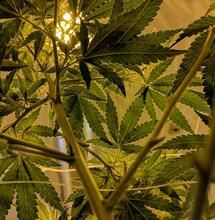
Proper fixture positioning prevents light burn while ensuring your plants receive enough energy to drive photosynthesis. If your light fixtures are mounted too high, plants stretch, resulting in weak stems and sparse node spacing. If they are placed too close, top colas end up bleached or heat-stressed. Installing adjustable ratchet hangers allows you to raise or lower your fixtures easily as the canopy grows.
3. Maintain Equipment and Keep Fixtures Clean
Over time, light output gradually diminishes across all fixture types. Dust and dried water spots on LED bars, glass lenses, or reflector hoods block valuable light from reaching your plants. Regularly clean fixture surfaces with a soft micro-fiber cloth between cycles. When handling bulbs or diodes, avoid bare hand contact; skin oils can create hotspots on surfaces, reducing diode efficiency and shortening the lifespan of your equipment.
4. Choose the Right Lighting Technology for Your Grow Space
Different lighting systems serve distinct cannabis cultivation goals and strategies:
- Full-Spectrum LEDs: Highly efficient with low heat output, making them ideal for complete crop cycles, micro-grows, and spaces where heat management is a challenge
- HID Fixtures (HPS/CMH): Known for deep canopy penetration and powerful light output, though they require robust ventilation to manage excess thermal radiation
- CFLs and Low-Wattage LEDs: Excellent for germinating seeds, rooting clones, and maintaining mother plants in small quarters without overpowering delicate foliage
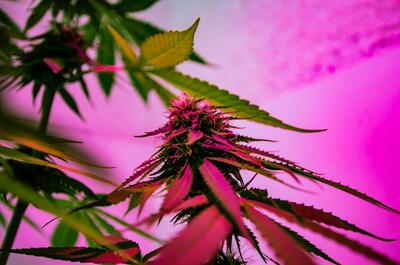
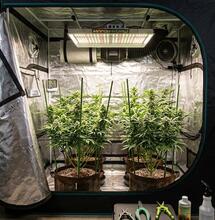
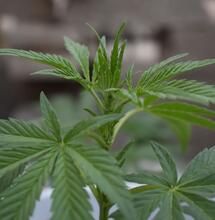
Adjusting LED fixture height and canopy distance helps growers optimize light delivery without causing heat stress or light bleaching on top colas. Photo by Andrés Gómez on Unsplash
5. Balance Light Output with Cannabis Environmental Controls
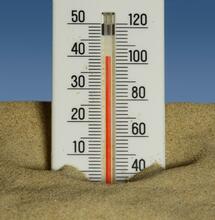
Simply adding more wattage to a grow space does not automatically translate to a bigger harvest. Beyond a certain threshold, cannabis plants cannot process additional light unless temperature, humidity, and carbon dioxide levels are scaled accordingly. Pushing excessive light into a hot or unventilated room risks severe heat stress and stunted development. Ensure your ventilation systems can easily handle the thermal output of your fixtures.
6. Maximize Coverage with Reflective Wall Materials
Light directed toward the walls of your grow room is wasted unless it is reflected back onto the plant canopy. Lining your walls with highly reflective materials such as Mylar or Panda Film directs stray photons toward lower branch sites that would otherwise remain in the shade. This simple adjustment improves overall light distribution and helps develop denser lower buds.
7. Avoid Sharp Corners to Eliminate Light Loss
When setting up reflective walls or lining a custom grow tent, avoid creating sharp 90-degree corners. Bending reflective material into soft, gradual curves along room corners creates a smoother bounce, directing light back toward the center of the growing area rather than trapping it in tight seams. Combined with textured “hammered” reflective surfaces, this geometry prevents hot spots and delivers balanced coverage across the entire room.
Read more from Soft Secrets:
Disclaimer: Cannabis cultivation laws vary by region. Readers are advised to check and comply with the regulations applicable in their local jurisdiction before cultivating cannabis.
S
Soft Secrets