Male vs Female Cannabis Plants
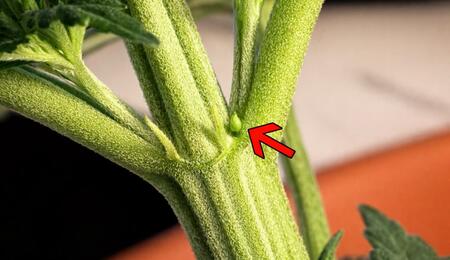
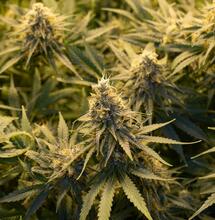
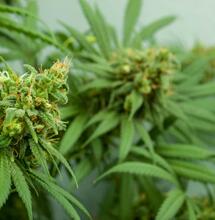
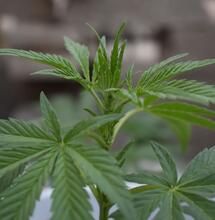
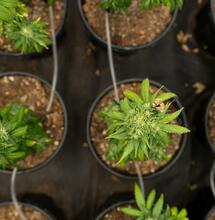
That tiny bump at the node is an early female pre-flower—spotting it early helps growers remove males in time and protect a seedless, high-potency sinsemilla harvest.
Whether you are a hobbyist or a commercial grower, the ability to tell a “he” from a “she” in your garden is one of the most valuable skills you can have. In cannabis cultivation, gender shapes everything. While male plants are the backbone of breeding, female plants are the ones that produce the resinous, cannabinoid-rich buds we all love. In this guide, we’ll break down how to identify cannabis plant sex early, why it matters for your harvest, and how to manage your garden to ensure a top-tier “sinsemilla” crop.
Why Identifying Plant Sex is Critical for Growers
Cannabis is a dioecious species, meaning individual plants are typically either male or female. For the average grower, the goal is to produce sinsemilla (Spanish for “without seeds”).
When a female plant is pollinated by a male, she shifts her energy away from producing THC and terpenes and puts it into seed production. This results in:
- Lower Potency: Seeded buds can have significantly lower THC levels (often dropping from 20%+ to as low as 5-8%).
- Reduced Yield: The weight of seeds displaces the weight of usable flower.
- Harsher Smoke: Seeds contain oils that create an unpleasant, popping, and bitter smoke.
Unless you are a breeder looking to create new genetics, finding a male in your cannabis grow room is usually a signal to act fast.
When Do Cannabis Plants Show Their Sex?
Plants don’t show their sex immediately upon sprouting. They go through a vegetative stage where they focus solely on growth. Sexual characteristics, known as pre-flowers, typically appear at the nodes (the point where branches meet the main stem).
- Males: Usually reveal themselves earlier, around 3–4 weeks from germination.
- Females: Typically take a bit longer, showing signs between 4–6 weeks.
By the time you switch your indoor lights to a 12/12 cycle (or as the days shorten outdoors), the sex should be clearly visible with the naked eye or a small magnifying glass.
How to Spot a Female Cannabis Plant
Female plants are the “queens” of the garden. Here is what to look for during early identification:
- V-Shaped Pistils: Look for two tiny, wispy white hairs (called stigmas) emerging from a teardrop-shaped base (the bract).
- Bushier Stature: Females tend to be shorter and have more lateral branching compared to their lanky male counterparts.
- Upward Growth: Female pre-flowers tend to point upward, tucked into the junction of the node.
- Trichome Development: Even in early flowering, females will begin to show a “frosty” appearance on the small leaves surrounding the bud sites.
How to Spot a Male Cannabis Plant
Male plants are built for one thing: height and pollen dispersal.
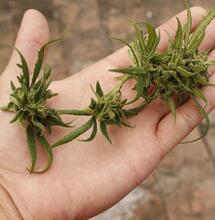
- Pollen Sacs: Instead of white hairs, males grow small, smooth, round balls that resemble “spades” or “crab claws.”
- Grape-like Clusters: As they mature, these sacs will begin to hang down in clusters that look like tiny bunches of grapes.
- Lanky Growth: Males often grow faster and taller than females, with more space between the branches (internodal spacing). This height helps them “rain” pollen down onto the shorter females.
- Thick Stems: To support their rapid vertical growth, males often develop thicker, woodier stalks.
What About Hermaphrodites (Hermies)
Sometimes, a plant can develop both male and female sex organs. This is known as hermaphroditism.
- Causes: Stress is the primary culprit. Light leaks during the dark cycle, extreme heat, or physical damage can trigger a female plant to grow “bananas” (yellow pollen-producing anthers) as a survival mechanism to pollinate itself.
- Risk: A single “hermie” can pollinate your entire room just as effectively as a male. Regular inspection is key, especially during the first three weeks of flowering.
What to Do If You Find a Male in Your Garden
If you aren’t breeding, the standard procedure is immediate removal.
- Careful Bagging: If the pollen sacs look mature, place a plastic bag over the plant before moving it to prevent pollen from shaking loose and drifting onto your females.
- Clean Up: If a sac has already burst, mist the area with water (water neutralizes pollen) and wipe down your grow space.
- Breeding: If you keep the male, isolate it in a completely different room or building with a dedicated ventilation system.
Identifying Male Plants Early Is Important
Early in the growth cycle, male and female cannabis plants look identical—it might feel like a “wait and see” situation until pollen sacs or white pistils appear. Fortunately, growers don’t have to wait for full flowering; old-school methods can reveal plant sex during the vegetative stage.
- Pre-Flowers Check (Standard Method): Remember, pre-flowers appear at the nodes between weeks 3–6 from seed (sometimes as early as week 3), becoming more visible as the plant matures and clearly revealing its sex by week 6.
- Take a Clone and Force Flowering: This method is useful for plants that are slow to show pre-flowers. By taking a cutting (clone) from the plant and placing it directly into a flowering light cycle (12/12), the clone will reveal its sex much faster than the original plant. This approach can save time—and prevent disappointment—especially for small grows with just one to three plants.
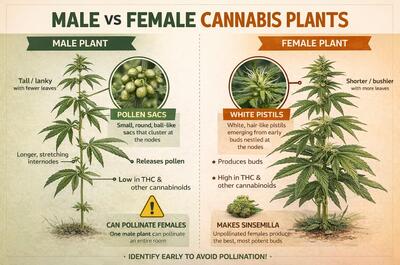
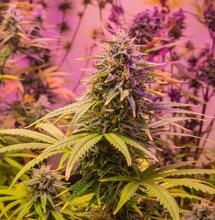
Female plants boost resin when unpollinated. When no males are present, females channel energy into producing more trichomes and cannabinoids instead of seeds—this is why sinsemilla is more potent.
FAQ: Identifying Cannabis Plant Sex
Q: Can I tell the sex of a plant from the seed? A: Visually, no. Regular seeds look identical regardless of sex. However, you can buy feminized seeds, which are bred to produce 99.9% female plants, or use DNA leaf testing (qPCR) on seedlings as young as one week old.
Q: How often may I come across male seeds? A: Regular cannabis seeds typically produce a 50/50 split of male and female plants, meaning about half won’t yield usable buds.
Q: Do both male and female cannabis plants produce pre-flowers? A: Yes. Both male and female cannabis plants develop pre-flowers during the vegetative stage. These early sex organs appear at the nodes and reveal the plant’s gender before full flowering.
Q: How to tell the difference between male and female pre-flowers? A: Male pre-flowers form small, round pollen sacs, while female pre-flowers develop teardrop-shaped calyxes that later produce white pistils. Spotting these differences early allows growers to manage their plants and prevent unwanted pollination.
Q: Does a male plant produce any THC? A: Yes, but in very low amounts (usually under 1-5%). They are not suitable for smoking, though some use them for juicing or hemp-style fiber.
Q: Can a male plant turn back into a female? A: No. A plant’s biological sex is determined by its genetics. While environmental stress can cause a female to show male traits (hermaphroditism), a true male will never produce buds.
Q: How far can pollen travel? A: In outdoor settings, cannabis pollen is light and can travel miles on a breeze. Indoors, your intake fans and clothing are the biggest risks for cross-contamination.
Q: If I find seeds in my “sinsemilla” bud, was there a male nearby? A: Most likely, yes—or one of your females turned hermaphrodite and “selfed” itself.
More from Soft Secrets:
S
Soft Secrets