The Hemp ‘Apocalypse’ is Here: Surviving the 2026 THC Cap

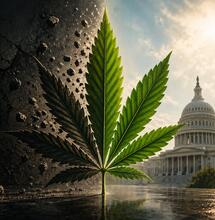
The “Hemp Loophole” that birthed a $28 billion industry is officially closing. On November 12, 2025, as part of the federal spending package (H.R. 5371) signed to end the government shutdown, Congress quietly but fundamentally redefined “hemp.” What follows is a clear-eyed look at the implications of that shift—and what businesses can do now to adapt in order to survive.
The industry is now on a one-year “Doomsday Clock.” By November 2026, a significant majority of current hemp-derived cannabinoid products—including Delta-8, THCA flower, and many full-spectrum CBD oils—are expected to fall outside the federal definition of legal “hemp” and instead be regulated as marijuana under federal law.
The 0.4mg ‘Death Blow’: Understanding the New Math
Since 2018, the industry has relied on a 0.3% Delta-9 THC limit. The new law introduces a secondary, far stricter barrier for consumable products, dramatically reducing the practical relevance of percentage-based compliance for finished goods.
- The Per-Container Cap: Final consumer products (edibles, beverages, vapes, tinctures) are now limited to 0.4 milligrams of total THC per container.
- Total THC Standard: Unlike the 2018 Farm Bill, the law now counts Total THC, meaning Delta-9 THC plus THCA, Delta-8, Delta-10, and other THC-like isomers, regardless of how small each component may be individually.
To put this in perspective: a standard 10mg Delta-9 gummy would now exceed 25 times over the legal limit. Even a “non-intoxicating” full-spectrum CBD tincture containing 2mg of naturally occurring trace THC per bottle would no longer qualify as federally legal hemp once enforcement begins.
The ‘Synthetics’ Ban
The legislation explicitly excludes any cannabinoid “synthesized or manufactured outside of the plant” from the definition of hemp. This effectively ends the legal protection for the chemical conversion processes used to create Delta-8, Delta-10, and HHC from CBD isolate.
By late 2026, these converted cannabinoids are expected to be treated as non-hemp substances under federal law, subject to Controlled Substances Act enforcement and DEA interpretation, rather than remaining in the federally legal hemp market.
Critical Timeline: The 2026 Roadmap
Hemp businesses cannot afford to wait. The transition period is already in motion:
- February 10, 2026: The FDA is mandated to publish guidance and lists identifying naturally occurring cannabinoids, “THC-like” substances, and other compounds excluded from the hemp definition.
- Mid-2026: Retailers are expected to begin aggressive inventory reductions as insurers, payment processors, and banks reassess risk exposure tied to high-THC hemp products.
- November 2026: The compliance period ends and full federal enforcement begins, effectively shutting down interstate commerce for non-compliant products.
Business Survival Strategy: How to Pivot
If you’re a hemp entrepreneur, the reality is unavoidable: the business model that worked yesterday may not survive into 2027. Below are several practical paths forward that could help future-proof your business as the hemp market enters its most restrictive era yet.
- Pillar 1: The “Pure” Wellness Pivot. Shift R&D toward broad-spectrum or THC-free formulations (0.0% total THC) and minor cannabinoids such as CBG or CBN that fall outside the “THC-like” category.
- Pillar 2: Move to State-Licensed Systems. For brands built around high-potency or intoxicating products, the only viable long-term path forward is entering state-licensed marijuana programs (e.g., MRTA in New York, DCC in California). The era of federally tolerated, unregulated high-THC hemp is ending.
- Pillar 3: Non-Ingestibles and Industrial Hemp. Industrial hemp—fiber, grain, textiles—and certain cosmetic applications remain protected under the traditional 0.3% total THC standard, as they are not final consumer products intended for ingestion or inhalation.
Final Words
The brands that make it through the next two years won’t be the ones hoping for extensions or loopholes, but the ones adapting early, tightening compliance, and rethinking what they sell and how they sell it.
For many, that will mean hard decisions. Unfortunately, in some cases, that will amount to walking away from best-selling SKUs, and then rebuilding formulations from the ground up, or abandoning entire product categories that no longer make regulatory sense. For others, it will mean leaning into transparency, investing in testing and documentation, and treating compliance not as a cost center, but as a competitive advantage.
Brands that recognize this shift early will have time to reposition, earn trust with partners and consumers, and emerge smaller—but hopefully stronger—on the other side.
More from Soft Secrets:
S
Stephen Andrews