Is ICE Weaponizing Old Weed Charges for Deportations?
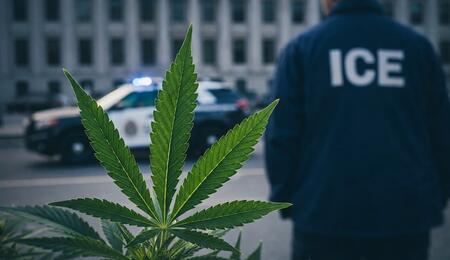
Many believe that because cannabis is moving to Schedule III, a possession charge is no longer a “serious” crime. However, this just might be a dangerous legal misunderstanding.
For much of the cannabis community, “Schedule III” sounded like a finish line. A sign that the era of serious cannabis prosecutions is finally winding down. But the reality on the ground presently looks much more like a minefield—especially for the hundreds of thousands of non-citizen residents, green card holders, and visa workers living in so-called “legal” states, who could still face detention or deportation because of cannabis.
While President Trump’s December 2025 Executive Order was touted as a pro-business move to kill the 280E tax burden, a darker side of federal policy is emerging. Recent reports from The Guardian and immigration advocates reveal that federal agencies can actually use simple possession as a fast-track basis for deportation.
The Rescheduling Paradox
Listing cannabis as a Schedule III is something to celebrate as we move into 2026—but for many, this “victory” may be a Trojan horse. For the matter of fact, rescheduling does not equal safety. While the White House touts the medical benefits of the plant, federal agencies like ICE (Immigration and Customs Enforcement) are simultaneously ramping up enforcement against the very people who built this culture.
As Cat Packer of the Drug Policy Alliance recently noted, “Marijuana has specific penalties under the CSA [Controlled Substances Act] that are not dependent on the schedule.” For the Department of Justice (DOJ), cannabis remains a controlled substance.
Since the DOJ rescinded Biden-era leniency guidance late last year, U.S. Attorneys can once again pursue “simple possession” cases with full force. Even in legal states, being “state-legal” may offer zero protection against federal agents who might view any cannabis interaction as a violation of immigration law.
The Data: A Five-Year ‘Zombie’ Trap
It isn’t just new arrests that are the problem. According to an analysis by The Marshall Project, the federal government is reaching back into the past. In 2025, over 600 people were deported with their most serious convictions being marijuana-related.
The most chilling statistic? In 75% of those cases, the offense occurred at least five years ago. These are “zombie convictions”—minor incidents from a time when many states were already fully legal that are now being resurrected to justify expedited removal.
ICE and the ‘Crime Emergency’ Loophole
Analysis suggests that enforcement isn’t happening in high-end dispensaries; it’s happening on the streets. An ICE agent at a checkpoint or during a routine stop might use a legally bought pre-roll from a dispensary to justify a deportation hold—or even a past weed charge from, say, 2021.
Who might be targeted?
- Public Consumption: Non-citizens are most vulnerable to “simple possession” charges during public consumption stops.
- Industry Workers: Working in a state-legal dispensary can be interpreted as “Drug Trafficking” by federal immigration authorities. Therefore, it would not be surprising to see a rise in naturalization denials for immigrants whose only “crime” was having a legal job in the cannabis industry.
Safety Checklist: Protecting Yourself in 2026
If you are not a U.S. citizen, the rules of the game in 2026 are strict. To maintain your status and safety, legal experts recommend:
- Avoid Public Use: Federal “Zero Tolerance” zones (National Parks, Federal buildings, and transit hubs) are high-risk areas.
- Do Not Carry: If you do not have a U.S. passport, carrying even small amounts of cannabis can trigger deportation proceedings.
- Old Records Matter: If you have a past possession charge, consult an immigration attorney now to see if it can be vacated or sealed before it’s flagged.
- Silence is Golden: If questioned by federal agents, do not admit to past use or current possession without an attorney present. An admission is legally equivalent to a conviction in immigration court.
- Digital Hygiene: Photos of your grow or your stash on social media can be used as evidence of “bad moral character” during residency hearings.
The Verdict: Is ICE weaponizing weed?
The numbers suggest yes. Unfortunately, until cannabis is fully removed from the Controlled Substances Act (descheduled), it can become a tool for federal overreach.
More from Soft Secrets:
Disclaimer: This article is for informational and journalistic purposes only. It does not constitute legal advice. If you are a non-citizen with concerns about your status, please consult a qualified immigration attorney.
S
Stephen Andrews