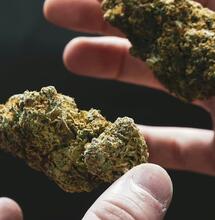
Trump Signs Executive Order to Reclassify Marijuana as Schedule III Drug
Source: The White House
In a move that marks the most significant shift in federal cannabis policy in over half a century, President Donald Trump signed a landmark executive order, Thursday, Dec. 18, in the Oval Office, directing the Department of Justice and HHS to fast-track the rescheduling of marijuana to Schedule III under the Controlled Substances Act.
The signing ceremony, attended by Attorney General Pam Bondi and HHS Secretary Robert F. Kennedy Jr., signals the end of marijuana’s status as a Schedule I substance—a category it has occupied since the 1970s alongside drugs like heroin.
By moving to Schedule III, the federal government would officially recognize that cannabis has an accepted medicinal use in treatment in the United States, a pivot that will have massive implications for taxes, medical research, and patient access.
The End of the 280E Tax Burden
For the American cannabis industry, the most immediate and profound impact of this executive order would be the elimination of the IRS Section 280E tax penalty.
Under Schedule I, cannabis businesses have been prohibited from claiming standard business deductions, often resulting in effective tax rates as high as 70–80%. As a Schedule III substance, legal dispensaries and cultivators will finally be able to deduct ordinary business expenses like rent, payroll, and marketing. This shift is expected to inject billions of dollars back into the legal market, providing much-needed relief to struggling operators in states like California, New York, and Colorado.
Expanding Medical Research and Medicare Access
HHS Secretary Robert F. Kennedy Jr. emphasized that the reclassification is a victory for “data-driven medicine.” The order should facilitate:
- Federal Research: Removing the cumbersome DEA “N-package” requirements that have historically stifled clinical trials on the cannabis plant.
- Medicare Pilot Program: The order includes a directive for a pilot program to explore Medicare reimbursement for certain CBD-based treatments, a first in U.S. history.
- Pharmaceutical Integration: Schedule III allows for the possibility of pharmacies dispensing state-legal medical cannabis, though the transition will require significant FDA rulemaking.
Legal Reality: Rescheduling vs. Legalization
It is vital for consumers and stakeholders to understand the legal nuances of this order. Rescheduling is not federal legalization or decriminalization. While the move lowers the federal “severity” of cannabis, it remains a controlled substance. Recreational use in states without local legal frameworks remains illegal, and the transport of cannabis across state lines is still subject to federal oversight. Furthermore, the 2018 Farm Bill regarding hemp remains a separate legal pathway for low-THC products.
What Comes Next?
The executive order directs Attorney General Pam Bondi to finalize the administrative rulemaking process “with all deliberate speed.” While the signing is the definitive political act, the DEA and DOJ must still fulfill formal public comment periods and administrative filings to update the federal registry.
For now, the “Green Rush” has received its most powerful endorsement from the White House yet, setting the stage for a new era of regulated, medically-recognized cannabis in the United States.
More on this topic from Soft Secrets:
S
Stephen Andrews