FDA Submits New CBD Enforcement Policy to White House
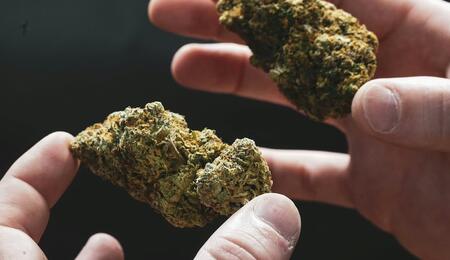
The FDA begins transitioning away from “enforcement discretion” as it advances a formal CBD enforcement framework.
On March 13, the Food and Drug Administration (FDA) quietly submitted a long-awaited document titled “Cannabidiol (CBD) Products Compliance and Enforcement Policy” to the White House Office of Information and Regulatory Affairs (OIRA). For an industry that has operated in a regulatory gray area since the 2018 Farm Bill, this submission signals a move toward more formal federal oversight.
After years of regulatory ambiguity, the FDA’s latest proposal suggests a gradual end to “enforcement discretion” regarding CBD. While the text of the proposal remains confidential during the 90-day review period, its intent appears clear: the FDA is preparing to standardize the marketplace.
What’s Inside the Proposal?
Industry analysts expect the policy to address several recurring issues in the market:
- Serving Size Limits: Possible federal caps on THC content in “full-spectrum” hemp products, potentially around 10 mg per serving or 100 mg per container.
- Standardized Labeling: Requirements for clear “Hemp-Derived” markings and accessible Certificates of Analysis (COAs) for all retail products.
- The “Hemp vs. Cannabis” Divide: Clarification on which cannabinoids are naturally occurring versus semi-synthetic derivatives (such as some Delta-8 variants) that may face regulatory restrictions.
Administrative Context
The submission follows a December executive order from the previous (Biden’s) administration aimed at accelerating medical marijuana and CBD research. With HHS Secretary Robert F. Kennedy Jr. emphasizing transparency over ambiguity, the FDA has faced growing pressure to provide clear guidance for companies seeking to operate legally. The policy is expected to serve as the first step in a pilot program that could eventually allow certain CBD products to be covered under federal health insurance plans.
Timeline for Businesses and Consumers
The OIRA review is the final stage before the policy becomes official. If the process proceeds on schedule, a formal announcement could arrive by mid-June. For consumers, this may translate to more reliable products and fewer imitations on the market. For businesses, it signals an immediate need to audit supply chains and packaging to align with the anticipated federal standards.
Read more from Soft Secrets:
Disclaimer: This article is for informational and journalistic purposes only. The proposed FDA policy is currently under review and subject to change. Hemp and cannabis laws vary by state. Consult legal counsel regarding product compliance and local regulations.
S
Stephen Andrews