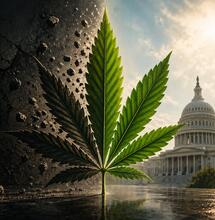
US Drops Cannabis from Most Dangerous Drug Class
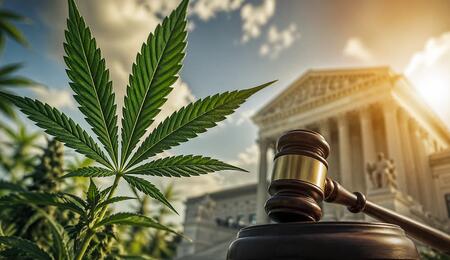
The US shifts cannabis out of the same category as heroin and LSD, marking a major turning point in federal drug policy.
In a landmark change to U.S. drug policy, the federal government reclassified cannabis from Schedule I to Schedule III under the Controlled Substances Act, a move that fundamentally reshapes how the substance is viewed at the federal level.
Until now, marijuana was classified alongside drugs like heroin and LSD, defined as having no accepted medical use and a high potential for abuse.
With this decision, it now sits in Schedule III, a category for substances with accepted medical use and moderate-to-low potential for dependence, alongside drugs such as ketamine and anabolic steroids.
What Happened
On April 23, 2026, Acting Attorney General Todd Blanche signed the final order officially moving state-licensed medical marijuana from Schedule I (no medical use, like heroin) to Schedule III (moderate-to-low dependence, like ketamine or anabolic steroids). This follows Executive Order 14370 issued by President Trump in December 2025 to expedite the process.
Blanche said in a post on X that the Department of Justice was “delivering on President Trump’s promise to improve American healthcare.”
“This includes: Immediately rescheduling FDA-approved marijuana and state-licensed marijuana from Schedule I to Schedule III,” his post read.
He added that completing the process would require ordering a new, expedited hearing with set deadlines to fully reschedule marijuana.
What Changes Now
Tax Relief (Section 280E)
The reclassification is expected to ease the burden of Internal Revenue Code Section 280E. Cannabis businesses operating within state-legal medical frameworks will finally be able to deduct ordinary business expenses. This addresses one of the industry’s biggest financial constraints, where companies have faced unusually high effective tax rates.
Research Expansion
Moving out of Schedule I removes one of the biggest bottlenecks for scientific research. Researchers can more easily study cannabis and its compounds. The change is intended to support evidence-based medical use and safety evaluation.
Federal Recognition of Medical Use
Schedule III classification formally acknowledges that cannabis has accepted medical use under federal standards. This aligns federal policy more closely with the reality that most U.S. states already allow medical cannabis.
What Does Not Change
No Federal Legalization
Cannabis is still a controlled substance under federal law. The reclassification does not legalize marijuana nationwide.
Recreational Use Remains Unchanged Federally
The change primarily applies to state-licensed medical marijuana and certain regulated products. Adult-use (recreational) cannabis remains outside this federal framework.
Criminal Liability Still Exists
Activities outside regulated systems can still trigger federal penalties. Federal and state laws remain misaligned in many areas.
The “Hemp Cliff” to Watch
While marijuana policy is loosening, hemp-derived cannabinoids face increasing scrutiny.
The Agricultural Improvement Act of 2018 legalized hemp, but newer legislative proposals could tighten rules on intoxicating hemp derivatives like Delta-8 THC.
Some measures could restrict or effectively ban parts of the hemp market by the end of 2026.
The Bottom Line
The U.S. government is officially moving cannabis out of the most restrictive drug category, ending decades of its classification alongside substances like heroin and LSD.
- It’s a major shift for research, taxation, and medical recognition.
- But it stops short of full legalization or a unified national cannabis framework.
The result is a system that is less restrictive—but still fragmented.
Read more from Soft Secrets:
S
Stephen Andrews