All You Need to Know About Flowering Cannabis Plants
The lifecycle of a cannabis plant consists of the seedling, vegetative, and flowering stages. It is during the flowering period that all the magic happens, and you get to watch your plants produce those frosty and delicious-smelling buds that you will later smoke.
In this article, I will cover everything you need to know about flowering cannabis plants, including the anatomy of colas, the correct lighting requirements, and environmental conditions. As well as feeding your flowering plants, there are different ways to increase yields, allowing you to produce the best buds possible as an indoor grower.
Cannabis Colas During Flowering Explained
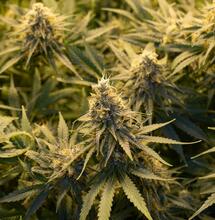
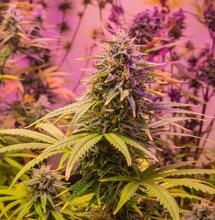
A cola is the name given to a cluster of buds produced on a cannabis plant. There are two types of colas when growing cannabis. The first is the primary cola, which refers to the main central cola at the tallest point of the canopy, exposed to the most light.
Secondary colas are found beneath the primary cola and are produced at the end of the side branches. Secondary colas may not receive as much light as primary colas; however, they are equal in potency and terpene production.
The Flowering Stretch: Managing Cannabis Height
Cannabis plants stretch once they are triggered into flowering, and do so in response to the more extended darkness periods of the 12/12 cannabis light scheduale. The reason cannabis plants stretch is to grow as tall and wide as possible, to receive as much light as possible.
- Cannabis plants can increase by 100-300% of their original size during 12/12
- The stretching phase will last between 1 and 4 weeks once flowering is induced
- Sativa cannabis plants will stretch the most compared to indica and hybrid genetics
- Plant training during vegetation can significantly reduce the final plant height.
Lighting Intensity and PPFD Levels
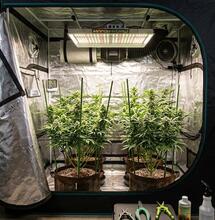
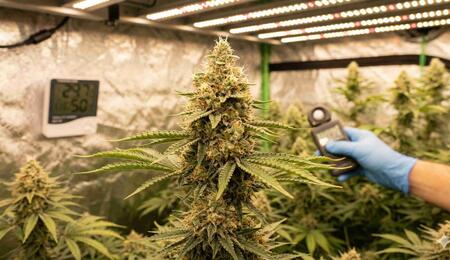
Photosynthetically active radiation (PAR) is what cannabis plants need to photosynthesise and grow. PPFD refers to the amount of PAR available per second, so ensuring you have the correct PPFD levels during the flowering period is advantageous for achieving the highest yields. Using a light meter is advised when measuring the canopy PPFD level of your grow tent.
- 600-900 mol/m2/s during flowering - photoperiod cannabis plants
- 600-900 mol/m2/s during flowering - autoflowering cannabis plants
The Optimal Temperature for Flowering Cannabis
Lighting is an essential part of growing healthy and robust cannabis plants; however, the correct temperature and humidity levels are also critical. Cold temperatures can slow plant growth and yield, whilst high temperatures can cause plants to stretch and form fluffy, air buds. Making sure you provide a consistent grow room environment is a crucial part of the flowering stage.
- 22 - 24 degrees Celsius is optimal for grow rooms during flowering
- 24 - 28 degrees Celsius is optimal when supplementing plants with CO2
- Humidity levels between 40% and 50% are ideal for preventing mould.
Feeding Flowering Cannabis: EC Levels and Nutrients
The more nutrients you can give your plants during the flowering period, the better; however, there is a delicate balance between too little and too much. You don't want to cause nutrient deficiencies or starve your plants of the nutrients they need, nor do you want to overfeed them, which can result in toxicity and harsh-tasting buds once harvested.
- Use a digital EC pen to monitor how much food your plants receive
- Check the leaves for signs of nutrient deficiency or toxicity
- Follow the nutrient feeding guidelines when using flowering boosters
- An EC level between 1.6 and 2.0 is ideal for organically grown cannabis
- An EC level between 1.8 and 2.4 is ideal for hydroponically grown cannabis
Signs of Moulding Cannabis Buds
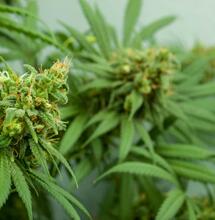
Even though the goal is to grow the tightest buds and the most enormous colas possible, you need to be careful that the buds do not become mouldy. The reason why growers can end up with mouldy cannabis buds is down to poor air flow, high humidity levels and poor environmental control.
- The buds will have a soft, airy and web-like consistency
- The aroma will be musky and have an earthy, damp smell
- Small brown spots will begin to appear on the outside of the bud
- Mould can spread from inside the buds to the outside
- Mouldy buds should be cut away and thrown away
- The colour of the buds will become darker when mould is present
- Mould can spread very quickly if the issue is not resolved
Ways to Increase Cannabis Yields
Training Cannabis Plants for Bigger Buds
Even when your PPFD levels are spot on and you have the correct range of nutrients and boosters, one way to help increase yields is by training your cannabis plants. There are many advantages to teaching your plants to manipulate canopy shape, size, and the potential number of flowering sites. Plant training should be performed during the vegetation stage to avoid causing stress and should range from topping, fimming, LST, super cropping, and pruning.
Supplementing with Carbon Dioxide
If you measure the air outside using a CO2 sensor, you will find the PPM levels are between 400 and 450. Cannabis plants can take much higher levels of carbon dioxide, as high as 1500 PPM. When supplementing your plants with carbon dioxide, make sure the lights have been on for one hour before application.
Humidity levels should also be increased to allow the plants to absorb more carbon dioxide through their stomata, but be careful not to let the buds become mouldy, and follow a VPD chart as a guideline to be sure.
Increase Light Intensity for Flowering Weed
Using a light meter, you will be able to see the exact amount of PAR your grow light is producing, and which parts of the canopy receive the most light. Hanging your grow light at the correct distance is essential for developing the finest buds without causing light burn or potentially inflicting heat stress.
Light Penetration and Canopy Control
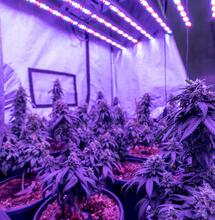
Making sure your plants are evenly spaced and that the canopy receives equal lighting will make a massive difference in flowering. LST, Screen of Green and mainlining are one way to dramatically enhance light penetration. Avoid over-crowding your plants and do your best to control the canopy.
Pruning The Lower Canopy for Denser Colas
Using a sharp scalpel to prune away the fan leaves and smaller shoots will allow the plants to focus their energy on a top-heavy canopy. Pruning should be done either a week before you change the light cycle to 12/12, or during weeks 1-3 when your plants are stretching. Avoid pruning plants once they begin forming, as this can cause stress.
My Final Thoughts
Cannabis plants love consistency, so do your utmost to keep them at the same temperature and humidity levels throughout flowering. Light intensity plays a significant role in how dense and resinous cannabis buds become, so invest in a light meter and monitor the PPFD levels.
If you like the idea of supplementing your plants with carbon dioxide to increase yields, use a VPD chart as a guideline and check your buds daily for signs of mould. Find the optimal feeding regime using an EC meter, and remember that some genetics can take more nutrients than others. Good luck flowering your weed plants, and growing incredible dense and frosty nugs!
Take your indoor grow further with Oaksterdam University
If you want structured guidance beyond trial and error, Oaksterdam’s Home Grow course walks you through setting up and running a productive indoor garden from seed to harvest. When you’re ready to turn that experience into job-ready skills, the Live Commercial Horticulture Worker program adds live instruction, hands-on learning, and the practical training you need to step into a professional grow with confidence.
Use code “tark10” at checkout to save 10% on your enrollment in either course!
S
Stoney.Tark