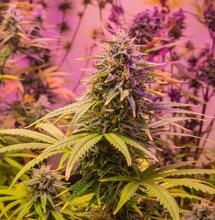
Why You Should Consider Hydroponic Cannabis Growing in 2026
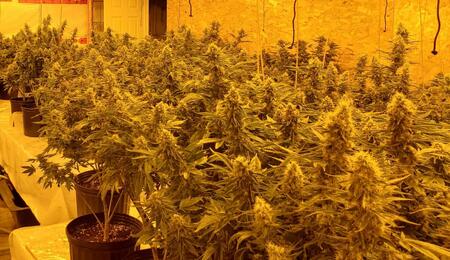
When growing organic cannabis, most cultivators' primary goal is to achieve both quality and quantity. While exceptional genetics often deliver premium-grade flowers, yields can sometimes fall short.
Hydroponics offers an alternative approach that prioritises speed, control, and production volume. This article explains what hydroponics is, how it differs from organic growing, the most common hydroponic systems, and the advantages and disadvantages of using this method, as well as highlighting the reasons why you may consider trying hydroponics in 2026!
What Is Hydroponics and Is It Better Than Soil?
Hydroponics is a cultivation method that uses inert growing media containing no organic matter. Instead of relying on soil, plant roots are either submerged in a nutrient solution, exposed to a thin nutrient film, or fed via a top-fed drip system, as required.
Liquid nutrients in hydroponic systems are delivered on a controlled schedule. This allows growers to precisely regulate feeding frequency and nutrient strength, ensuring plants receive exactly what they need. For this reason, hydroponic retailers strongly advise against using organic nutrients in reservoirs, as they can clog systems and disrupt nutrient delivery.
Nutrient solutions are mixed in a reservoir equipped with a pump or air stone, depending on the system. Plants are typically fed 2–3 times per day during the vegetative (18/6) stage, increasing to 3–5 feeds per day during flowering.
What Are The Difference Between Organic and Hydroponic Growing?
Growing organic cannabis typically involves hand-watering soil-based plants as needed. This method relies on beneficial bacteria and fungi within the soil food web to convert organic matter into available nutrients when plants demand them.
Hydroponics, by contrast, delivers nutrients in a mineral form that is immediately available to plant roots. Whether using drip systems, deep water culture (DWC), flood-and-drain, nutrient film technique (NFT), or aeroponics, roots have continuous or scheduled access to nutrients. Overwatering is rarely an issue in hydroponic systems.
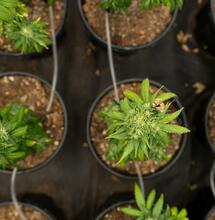
However, hydroponics requires close monitoring. pH levels must be checked regularly, as nutrient availability changes with pH drift. EC measurements indicate nutrient strength, making reliable pH and EC meters essential tools. These should be used every time a new nutrient solution is mixed. Another big difference is that the vegetative stage is kept very short, and plants typically flower in hydro systems within 7-10 days.
Hydroponic Growing Media
- Rockwool
- Hydroton (clay pebbles)
- Coco coir
- Perlite
- Vermiculite
- Mapito
Rockwool is the most popular medium among commercial vegetable growers. At the same time, cannabis cultivators often prefer coco mixed with perlite or rockwool cubes. One of hydroponics’ greatest strengths is efficiency. Large plants can be grown from relatively small substrates, such as 4 to 6-inch rockwool cubes.
This makes hydroponics lightweight, cost-effective, and highly practical for large-scale or commercial operations. There is no need to travel back and forth with bags of soil, and you do not need to worry about a dirty grow room floor.
Which Hydroponic System Is Best for You?
Top Dripper Systems
Top drippers are one of the most straightforward and affordable hydroponic systems, making them popular with home growers seeking to replicate commercial setups. They require a pump, tubing, drip lines, and a timer. This versatile system can also be used with soil. Drip stakes deliver nutrients directly to the root zone, making it an excellent entry-level option.
- An easy-to-set-up and straightforward hydroponic system perfect for beginners
- You can work on a small or large scale when installing dripper lines
- A silent system compared to ones that require an air pump running
- Drip rings can be used instead of dipper stakes
Deep Water Culture (DWC)
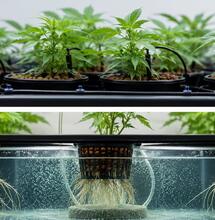
In DWC systems, plant roots are submerged in an oxygen-rich nutrient solution. Plants are supported by net pots, usually filled with hydroton, while air stones oxygenate the reservoir below. Plants grow rapidly and can reach impressive sizes, making DWC better suited to growers with prior hydroponic experience.
- An air pump is required to run 24 hours a day, making it a loud system
- Yields in DWC systems can be enormous, and some of the biggest possible
- Air pumps can stop working, so it is wise to have a backup pump on standby
- These systems can require a lot of maintenance
Nutrient Film Technique (NFT)
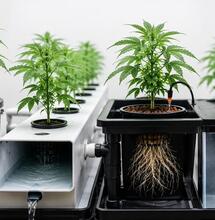
NFT systems are widely used commercially to grow lettuce and leafy greens. For cannabis, they can produce large plants and high yields. Seedlings or clones in rockwool cubes sit on a slightly sloped channel, where a thin film of nutrient solution flows continuously over the roots and is recycled 24/7. NFT systems are cost-effective and require minimal substrate—usually just a rockwool cube and rooting mat.
- A quiet system that is capable of producing incredible yields in small spaces
- Easy to use and only requires a water pump that is left on 24 hours a day
- A water heater placed inside the reservoir helps keep the temperature optimal
Flood and Drain (Ebb and Flow)
Flood-and-drain systems periodically flood plant roots suspended in hydroton with nutrient solution, then drain it back into a reservoir below. Feeding frequency increases as plants mature, reaching 5-6 cycles per day. This system works exceptionally well for Sea of Green (SOG) setups, maximising yield per square meter.
- These systems work incredibly well with hydroton clay or coco coir
- Plants can become huge during flowering
What Are the Benefits of Growing with Hydroponics?
As a grower with experience with organic and hydroponic cannabis cultivation, I can say there are plenty of benefits to using hydroponic systems.
A Big Increase In Yield
One of the most significant advantages of hydroponics is productivity. Compared to organic methods, yields can increase by up to 300% in some cases. This is why commercial producers of tomatoes, peppers, and other vegetables favour hydroponic systems. Cultivating indoor cannabis using hydroponics is one of the easiest ways to increase your harvests every 3 months significantly.
Consistent Feeding
Hydroponic plants thrive in hydroponic systems when the nutrient schedule is well dialled in. Roots have constant or scheduled access to nutrients, promoting faster growth, improved nutrient uptake, and larger harvests. You never need to think about hand-watering another plant again, as the systems do it all for you.
Autos Work Great
If you are considering growing hydroponically but do not want your plants to get too big, why not consider autoflowering genetics? Autos are fast-flowering and do not usually exceed 100 cm in height or width, and would thrive inside any hydro system.
Minimal Growing Medium
Many hydroponic systems require minimal substrate. In some cases, a small rockwool cube or net pot with hydroton is sufficient, reducing cost, weight, and waste. Growers who use systems such as DWC, aeroponics, or drip systems with the pump running 24 hours a day will only require a small amount of hydroton to grow their plants. Hydroton contains no nutrients, and can be washed, cleaned and reused.
Ideal For Small Grow Spaces
When you have limited growing space and need to work on a small scale, hydroponics is perfect. I recommend that a grow space suitable for 4 small plants fit a single DWC system inside. Growing with coco and using a dripper system is an ideal choice for Sea of Green setups.
My Final Thoughts on Hydroponics
Hydroponics offers unparalleled control, speed, and yield potential, making it ideal for growers focused on efficiency and production. Not only will using a hydro system make your job much easier, but you will also get a massive boost in yield and be astonished by production levels. If you are in two minds about it, start with a small Sea of Green setup using coco coir and dripper stakes. Good luck jumping ship to hydroponics in 2026 and never looking back!
S
Stoney.Tark