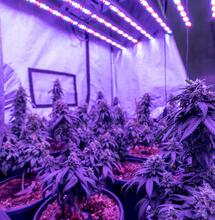
Growing the Best Organic Crops and the Importance of Flushing
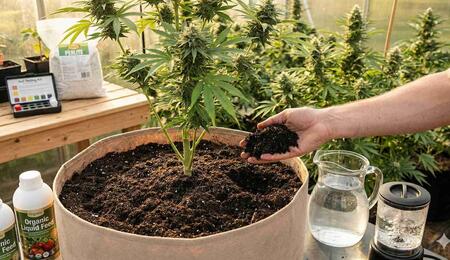
We all love to grow and smoke organic cannabis, since the flavour is much more intense. We know there are no chemicals in the buds, the aroma is exceptional, and the smoking experience of a well-cured bud is incomparable.
In this article, I will highlight the best ways to grow organic crops, covering soil quality, the difference between hard and liquid feeds, water quality, beneficial microorganisms and aerated tea, and explain why flushing a soilless growing medium is essential to achieving the ultimate results.
Why Soil Quality Matters in Cannabis Cultivation
If you are a first-time grower or have been growing organic cannabis for decades, everyone starts off by filling their pots with soil. Not everyone will know the difference between low- and high-quality soil, or which is best for cannabis cultivation.
You can take a trip to the garden centre or grow shop and be overwhelmed by all the different soil brands on offer. So, below is a short list explaining the differences between soil and what you should look for before spending your money.
Signs of Low-Quality Soil for Weed Plants
- The soil will have a dry appearance and feel compact when handling
- There will be no sign of earthworms crawling around inside
- Aroma will be minimal and not contain a rich, earthy, sweet smell
- The soil will be dusty and contain a high concentration of dirt
- When saturated, the soil will feel dense and have poor drainage
- The NPK ratio will typically be 20-20-20 due to chemical additives
- The price of the soil will be far lower than that of recognised brands
- The soil is not correctly stored and may appear squashed
- After watering, the soil feels heavy and takes a long time to dry out
- Contains a high count of beneficial bacteria and fungi
Signs of Top-Quality Cannabis Soil
- The texture will be airy, light and have a spongy consistency
- There will be perlite in the soil to improve aeration and drainage
- When smelling, the aroma will be rich, sweet and earthy
- Small earthworms will be crawling around inside
- The NPK ratio will be low, typically around 4-2-2
- The label will list the organic ingredients inside the soil
- The colour will be primarily black with a dark, rich shine
- Once saturated, water will drain out of the pot easily
- The soil is not dense and can dry quite quickly after watering
Organic Cannabis Nutrients – Hard Food or Liquid Feeds
Now that you are aware of the difference between good and bad soil, the next step is to consider which is best for cannabis plants. Hard food or liquid food? Hard food is organic matter that takes time to decompose, whilst liquid feeds can be absorbed instantly and act as a carbon-rich drench for soil microbes.
Many growers, when creating their own custom mix, aim to add a wide range of organic inputs alongside liquid fertilisers. As long as you have the correct NPK ratios balanced out and avoid any chemical-based nutrients, then the soil food web will do the majority of the work by converting organic matter into readily available nutrients.
Different Types of Hard Food
- Fresh compost
- Worm castings
- Decomposed plant matter
- Animal compost
- Bio char
- Bone meal
- Blood meal
- Seaweed
- Kelp
- Bat Guano
- Peat Moss
Different Types of Liquid Feeds
- Blackstrap molasses
- Humic acids
- Fulvic acids
- Worm extract
- Fish emulsion
- Aerated teas
- Veganic plant extracts
Soft Water vs. Hard Water in Cannabis Cultivation
Most growers will turn on their home tap and fill a bottle or bucket when making a nutrient mix. Those who are lucky enough to have access to soft water need not worry about taking extra precautions when watering their crops. Soft water has an EC level below 0.4 mS/cm, which means you have much more room to work with when making a nutrient solution.
Hard water contains a higher concentration of minerals, such as Calcium and Magnesium, because the water percolates through limestone, chalk, or gypsum. Hard water has a much higher EC level, making it more challenging to mix a nutrient solution that is not too high in EC, since it is between 0.7 and 0.8 mS/cm.
- Hard water can be filtered through a reverse osmosis filter to lower the EC level
- Hard water can leave behind a white chalky residue at the base and side of pots
- Bottled water is much softer and is an excellent alternative to hard water
- Reverse osmosis water has an EC level of 0.05-200 µS/cm
- Rainwater may contain pollutants, especially when collected in a city.
Introducing Beneficial Microorganisms and Feeding Aerated Compost Teas
If you are not sure whether your soil meets the best standards, you can easily introduce beneficial bacteria and fungi. There are two ways to do so, and the first is to make an inoculant using unchlorinated water and mixing plant bacteria and fungi packs sold by many brands in the cannabis industry.
The second is to make your own organic aerated compost tea at home. The best way to do so is to use a plastic bucket, an air stone, an air pump, and fill the bucket with unchlorinated water. Then take a micron-mesh bag, fill it with compost or worm castings, and leave it in the water to bubble and brew for 24 hours.
Autoseeds advises that worm castings, produced by worms and teaming with millions of beneficial bacteria and microorganisms, are a wonderful soil amendment. Not only will it provide nutrients and trace elements over long periods, but it will also encourage the soil food web to thrive.
- Aerated teas are optimal for restoring the soil food web inside the grow medium
- They are also a great way to supply plants with low amounts of nutrients
- You can feed plants aerated compost tea every 10-14 days to supercharge the soil
- Aerated compost teas are inexpensive and ideally suited for home growers
Why Flushing Is Important When Growing with Salts and Chemical Feeds
Flushing is an essential part of the flowering period before harvest, as salts accumulate around the roots and within the growing medium. Some growers argue that flushing soil is unnecessary and can continue using the same soil after every harvest. Suppose you are growing in coco coir or a soilless medium. In that case, flushing with plain water offers several advantages, as outlined below.
- Flushing with water helps the salts inside the growing medium break down
- Using enzymes during the final two weeks can accelerate the flushing process
- Flushing allows the plants to use their internal nutrient reserves
- The final taste is significantly improved, as well as smoothness, when smoking
- Flushing reduces nutrient usage, allowing nutrient bottles to last longer
Check the Runoff EC Level During The Flush
Checking the EC level of the runoff during the final two weeks of the flushing stage will allow us to monitor and see how clean the growing medium has become. Salt levels in the ever-increasing medium decrease as more plain water is added. Aim to achieve a run of EC level between 0.4 - 0.6 for the best tasting cannabis.
My Conclusion
If you are a first-time or beginner-level grower, then using soil and organic liquid feeds is the best way to go. Growing organic cannabis is far more forgiving than with a soilless or hydroponic growing medium, and you can reuse your growing medium after harvesting. Just make sure that you add the relevant organic inputs before reusing, such as worm castings and compost.
Making your own super soil recipe and natural fertilisers is a lot of fun and will teach you a lot about the soil food web. I highly recommend buying an aerated compost tea kit online and experimenting with which teas work best for the vegetative and flowering stages!
Take your indoor grow further with Oaksterdam University!
Suppose you want structured guidance beyond trial and error. In that case, Oaksterdam’s Home Grow course walks you through setting up and running a productive indoor garden from seed to harvest.
When you’re ready to turn that experience into job-ready skills, the Live Commercial Horticulture Worker program adds live instruction, hands-on learning, and the practical training you need to step into a professional grow with confidence.
Use code “tark10” at checkout to save 10% on your enrollment in either course!
S
Stoney.Tark