Do’s and Don’ts: Masking the Odor from Your Cannabis Garden
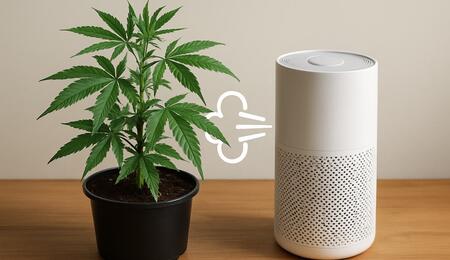
Avoid placing scented gels or sprays inside your grow room! The chemicals in most odor neutralizers are designed to bind with airborne terpenes, but they can accidentally strip the unique flavor and aroma right off your precious buds and ruin your harvest.
The signature, pungent aroma of a thriving cannabis plant is a clear sign of success for any home grower. However, that powerful, distinct scent, which is caused by volatile organic compounds known as terpenes, can quickly become a major liability, especially for discrete indoor cultivation setups. This article provides the essential Do’s and Don’ts for mastering cannabis odor control, keeping your passion private and your neighborhood compliant.
The Do’s: Expert Methods for Cannabis Odor Control in Cultivation
When it comes to controlling the odor emanating from your marijuana plants, especially during the potent flowering phase, simple air fresheners are not enough. A professional approach relies on filtration, ventilation, and a deep understanding of air dynamics.
Installing a High-Quality Carbon Filter System for Marijuana Plants
A carbon filter (or scrubber) is the single most effective investment in any indoor cultivation setup. This is the Gold Standard for odor elimination.
The Science of Adsorption: Activated carbon does not just ‘mask’ odors; it adsorbs them. The porous nature of the carbon creates a massive surface area that traps and binds the aromatic terpene molecules (the compounds responsible for the strong smell of buds) as air passes through it.
- DO: Always purchase a carbon filter rated for the cubic feet per minute (CFM) of your ventilation fan. The fan and filter must be perfectly matched to ensure adequate air turnover.
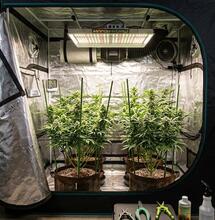
- DO: Place the filter inside the grow tent and run the ducting outside. Drawing air through the filter (negative pressure) is the most effective way to prevent odorous air from escaping through cracks.
- DO: Budget to replace your carbon filter every 12 to 18 months, or after 2-3 harvests. Once the carbon is saturated, its ability to adsorb is drastically reduced, leading to sudden odor leaks.
Optimizing Ventilation and Air Exchange for Healthy Cannabis Plant Growth
Ventilation is about more than just temperature and humidity; it is the core of effective cannabis odor control. Proper air exchange ensures a constant supply of fresh CO2 for photosynthesis while exhausting the odorous air through your filtration system.
- DO: Aim for a full air exchange every 1-3 minutes. Use the simple volume calculation for your grow space (Length x Width x Height = Cubic Feet) and divide it by the CFM of your fan.
- DO: Ensure you have both an exhaust fan (connected to the carbon filter) and an intake vent or fan. This creates the essential negative pressure environment. When the tent walls suck in slightly, you know you are effectively scrubbing the air before it leaves the space.
Using Ozone Generators Safely (A Last Resort Odor Control Measure)
Ozone generators are powerful devices that chemically destroy odors rather than filtering them. However, they must be used with extreme caution and are highly discouraged for use inside the grow space.
- DON’T: Never run an ozone generator inside the same space as your cannabis plants or where you are breathing. Ozone (O3) is harmful to lung tissue and can potentially damage the delicate terpenes and trichomes on your developing buds, affecting the final product’s aroma and potency.
- DO: If used, install the generator in the exhaust plenum or the immediate exit area (e.g., a locked attic) where the air is fully discharged and no one can breathe the ozone-rich air. This is a technical solution best left for highly controlled, large-scale cultivation setups.
The Don’ts: Common Mistakes That Ruin Your Buds and Your Security
Amateur growers often resort to quick fixes that are either ineffective, harmful to the plant, or dangerous to their health. Avoid these common odor control pitfalls.
Avoid Masking Odors with Ineffective or Harmful Chemicals
Masking agents are the enemy of true odor control. Products that claim to “neutralize” odors by releasing strong, competing scents often contaminate the air and your buds.
- DON’T: Use heavily scented air fresheners, incense, or aromatic candles near your cultivation. While they may temporarily cover the smell of marijuana, these heavy chemical scents can be absorbed by the trichomes, giving your final product an unpleasant, artificial taste and smell. This severely compromises the quality of your plant output.
- DON’T: Place odor neutralizer gels or blocks inside your grow tent. These active agents are designed to chemically bind with airborne terpenes. While they neutralize the smell in the air, they will also degrade the natural terpene profile of your flowering buds, defeating the purpose of high-quality cultivation.
Preventing Odor Spikes When Handling and Drying Buds
The peak odor periods are during the last weeks of flowering, harvest, and the critical drying/curing phase. A filter system running during the grow is insufficient for the massive odor released during harvest.
- DO: Plan a special ventilation strategy for harvest day. When you cut down the plant, the exposed stems release a burst of aromatic oils.
- DO: Ensure your drying area is fully sealed and uses a dedicated, active carbon filtration system. The drying room is often the most potent source of odor, as all the plant material is concentrated in one small, highly ventilated space. Never skip filtration here.
Legal Risks and Safety Precautions in Home Cultivation
The strength of the odor is often a key factor in law enforcement detection and neighbor complaints.
- DO: Understand the local legal framework for the personal cultivation of cannabis. In many legal jurisdictions, failure to properly mitigate odors can still result in fines or nuisance complaints.
- DON’T: Rely solely on passive methods like simply opening a window. Active, mechanical filtration (carbon scrubbers) is considered as the most secure and responsible method of odor control in the growing community.
Frequently Asked Questions about Odor from Your Cannabis Plant
Q1: Is the smell of a flowering cannabis plant dangerous or illegal?
A: The smell itself is not physically dangerous but is highly potent. The legality depends entirely on your local jurisdiction. In areas where cultivation is illegal, the smell is often the primary evidence used by law enforcement or cause for neighborhood complaints. Even in legal markets, excessive odor can be a civil nuisance violation. Therefore, rigorous odor control is an essential part of responsible cultivation.
Q2: How often should I replace the carbon filter in a home cultivation setup?
For most quality home-use carbon filters, replacement is recommended after 12 to 18 months of continuous use or after 2-3 full harvest cycles. Carbon filters degrade based on air volume processed and humidity. If you start to notice the smell of your marijuana plants escaping the grow room, it is definitely time for a replacement.
Q3: Will using odor neutralizers affect the final quality or terpenes of the buds?
Yes, they can. Most chemical-based odor neutralizers (gels, sprays) work by chemically bonding with airborne aromatic compounds, or the very terpenes that give your buds their unique aroma, flavor, and effect profile. Placing these within the cultivation or drying space can lead to a noticeable degradation of the buds’ natural terpene profile, making them less potent and less flavorful. Do not use them where the plants are growing or drying.
More on this topic from Soft Secrets:
S
Soft Secrets