VPD Mastery for LED Cannabis Growing
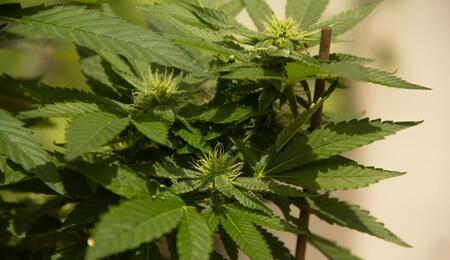
Leaf temperature plays a central role in VPD calculations, as cooler leaves under LED fixtures can alter plant transpiration compared to traditional HPS lighting systems.
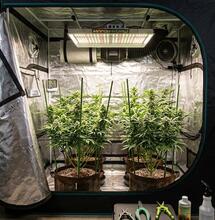
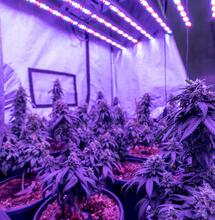
Transitioning to high-intensity LED lighting is the most significant upgrade a modern cultivator can make, yet many find their plants “stalled” despite perfect nutrient regimes. The culprit is almost always a misunderstanding of Vapor Pressure Deficit (VPD). Because LEDs lack the infrared heat of traditional HPS bulbs, leaf temperatures remain lower, fundamentally changing how a plant breathes and eats.
Why VPD Matters More Than Ever in 2026
As indoor cultivation continues its transition from HPS lighting to high-efficiency LEDs, many growers are discovering that older humidity guidelines no longer produce the same results. Slower growth, pale foliage, and stalled development are often not nutrient problems—they are climate problems.
At the center of this shift is Vapor Pressure Deficit (VPD).
Modern LED systems change how heat interacts with plant leaves, meaning environmental control must now focus less on relative humidity alone and more on how plants actually exchange water with the air around them.
Understanding VPD helps growers balance temperature and humidity so plants can transpire efficiently without stress.
This guide breaks down the science of transpiration and provides the exact metrics needed to unlock explosive growth and peak resin production.
What Is VPD?
Vapor Pressure Deficit describes the difference between:
- how much moisture the air currently contains, and
- how much moisture it could hold at saturation.
In practical terms, VPD measures the drying power of the air.
While Relative Humidity (RH) only describes atmospheric conditions, VPD reflects how actively a plant is able to “breathe” through its stomata—the microscopic pores responsible for gas exchange and nutrient transport.
When VPD is balanced:
- water movement through the plant remains stable
- nutrients travel efficiently from roots to leaves
- growth proceeds without unnecessary stress
When VPD is too low or too high, transpiration becomes inefficient.
The Formula: Why Leaf Temperature Matters
Accurate VPD calculation depends on Leaf Surface Temperature (LST), not just room temperature.
Under LED lighting, leaves are typically 3.6°F to 5.4°F (2–3°C cooler) than ambient air because LEDs emit far less infrared radiation than HPS lamps.
The simplified relationship is: VPD = VPₛₐₜ−VPₐᵢᵣ
Where:
- VPₛₐₜ = saturation vapor pressure at leaf temperature
- VPₐᵢᵣ = actual vapor pressure of surrounding air
Because saturation pressure changes with temperature, even small differences in leaf temperature can significantly alter VPD values.
This is why LED growers often miscalculate environmental targets when relying only on RH charts designed for older lighting systems.
Target VPD Ranges for Each Growth Stage
Rather than memorizing humidity percentages, growers can aim for VPD ranges suited to plant development.
Propagation & Seedlings — 0.4–0.8 kPa
Young plants have limited root systems and lose water easily.
Environment focus:
- Higher humidity
- Gentle transpiration
- Reduced drying stress
This helps prevent early dehydration while roots establish.
Vegetative Stage — 0.8–1.2 kPa
Plants benefit from a moderate atmospheric pull that encourages nutrient uptake.
Environment focus:
- Active transpiration
- Rapid leaf and stem development
- Balanced humidity control
Growth typically accelerates when VPD stabilizes in this range.
Early to Mid Flower — 1.2–1.5 kPa
As flowers begin forming, plants tolerate stronger transpiration.
Environment focus:
- Increased nutrient movement
- Dense flower development
- Reduced excess moisture around buds
Maintaining airflow becomes increasingly important during this stage.
Late Flower & Ripening — 1.5–1.6 kPa
A slightly higher deficit reduces moisture accumulation within dense canopies.
Environment focus:
- Lower mold risk
- Controlled water loss
- Support for final maturation
Environmental stability matters more than aggressive adjustments.
The LED Climate Challenge
Unlike HPS lamps, LEDs produce minimal radiant heat. As a result:
- leaves remain cooler
- transpiration slows
- metabolism can decrease if temperatures remain too low
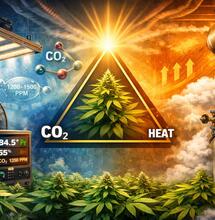
To compensate, many experienced growers now operate LED rooms at 26–29°C (79–84°F) air temperature to achieve an appropriate leaf temperature and maintain optimal VPD.
This adjustment—sometimes called the LED climate gap—explains why identical humidity settings may perform differently between lighting technologies.
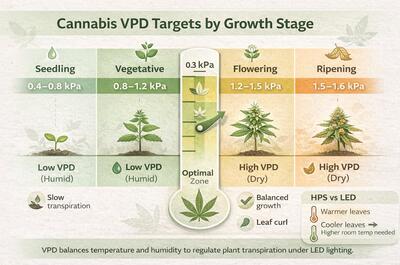
Recommended Vapor Pressure Deficit (VPD) ranges vary throughout the cannabis life cycle, helping growers balance temperature and humidity to support stable transpiration under LED lighting.
Common VPD Mistakes Growers Make
Even experienced growers often struggle with VPD when transitioning to LED environments.
The most frequent issues include:
1. Using Old HPS Humidity Charts
Many traditional humidity guides assume warmer leaf temperatures produced by HPS lighting. Applying these numbers under LEDs often results in low transpiration and stalled growth.
2. Ignoring Leaf Temperature
Room temperature alone does not determine VPD. Leaves are usually cooler than the surrounding air, especially under LEDs, which leads to inaccurate calculations if LST is not measured.
3. Chasing Numbers Too Aggressively
Constantly adjusting humidity or temperature to hit an exact value can create instability. Plants respond better to consistent environmental ranges than rapid fluctuations.
4. Forgetting Nighttime VPD
Lights-off conditions dramatically change temperature and humidity. Without adjustment, nighttime VPD can drop too low, increasing condensation and mold risk.
5. Treating Symptoms as Nutrient Problems
Yellowing leaves or slow growth are often blamed on feeding schedules when the underlying issue is poor transpiration caused by incorrect VPD.
Three Practical Tips for Controlling VPD
1. Measure Leaf Temperature Directly
Use an infrared thermometer or thermal sensor rather than estimating. Accurate LST readings are essential for reliable VPD calculations.
2. Automate Humidity Control
Environmental controllers that adjust humidity alongside temperature changes help maintain stable VPD throughout the day/night cycle. Consistency is often more important than chasing exact numbers.
3. Watch Plant Signals
Plants often reveal VPD imbalance before instruments do.
Common indicators include:
- Upward leaf curling (“canoeing”) → VPD too high (above ~1.7 kPa)
- Drooping or overly soft leaves → VPD too low
- Slow growth despite feeding → transpiration inefficiency
Visual monitoring should always complement environmental data.
Why VPD Is Becoming a Standard Metric
As LED cultivation matures, growers are moving away from fixed humidity targets toward dynamic climate management based on plant physiology.
VPD provides a framework that connects:
- temperature
- humidity
- transpiration
- nutrient uptake
- disease prevention
Rather than replacing traditional environmental monitoring, it integrates these variables into a single actionable measurement.
Frequently Asked Questions About VPD
Q: What is the ideal VPD for cannabis?
A: The ideal Vapor Pressure Deficit depends on the plant’s growth stage. Seedlings typically perform best between 0.4–0.8 kPa, vegetative plants between 0.8–1.2 kPa, and flowering plants between 1.2–1.6 kPa, with slightly higher values used late in bloom to reduce excess moisture.
Q: Is VPD more important than relative humidity?
A: Relative humidity is still useful, but VPD provides more actionable information because it combines humidity and temperature into a single measurement that reflects how plants transpire and regulate water loss.
Q: Why does VPD change under LED lights?
A: LED fixtures emit less infrared heat than HPS lamps, resulting in cooler leaf temperatures. Since VPD calculations depend on leaf temperature, growers often need warmer room temperatures to reach the same transpiration rates achieved under older lighting systems.
Q: How do I measure VPD accurately?
Accurate VPD measurement requires (1) air temperature, (2) relative humidity, (3) leaf surface temperature as measured with an infrared thermometer. Many grow controllers and online calculators can convert these values into kPA automatically.
Q: What happens if VPD is too high?
A: When VPD is too high, the air pulls moisture from leaves too quickly. Plants may respond with leaf curling, slowed growth, or nutrient imbalance due to excessive transpiration.
Q: What happens if VPD is too low?
A: Low VPD means the air is too humid, reducing transpiration. This can slow nutrient uptake, weaken growth, and increase the risk of fungal diseases in dense canopies.
Read more from Soft Secrets:
S
Soft Secrets