10 Top Tips for Cleaning Your Hydroponic Systems After Harvest
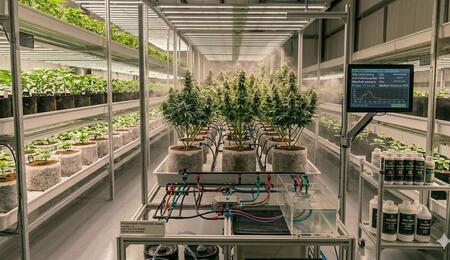
Hydroponic systems work by supplying your plants with synthetic nutrients through an inert growing medium. Over a full grow cycle, which typically lasts 10 weeks, hydro systems can become dirty and need a thorough deep clean.
Giving your hydro systems a thorough wash may sound simple enough, but ensuring they are fully sterile for the new grow will be advantageous. In this article, I provide 10 tips for cleaning your systems after harvest time, and how to make sure that you create a sterile and clean growing environment for your cannabis plants!
Tip #1 – Soak Drip Lines and Drippers
Nutrient salts will cause residue to build on dripper lines, which can soak the dripper lines, drippers, drip rings, or any other tubing you are using. Atami offers a product called ATAclean that actively breaks down crystal deposits of iron, manganese, calcium, and magnesium.
Using peroxide is great for killing bacteria; however, using a product for cleaning pipes and tubing will allow your system to run more efficiently without affecting pump pressure. I like to use a 10% hydrogen peroxide solution, but make sure you wear gloves when using it.
Tip #2 – Hand-Wash Net Pots
Net pots are the small black plastic pots that sit at the top of a deep-water culture or aeroponics system. They can also be used in pots with hydroton and drippers. Net pots should be washed after every harvest if you want to reuse them.
Even though you are very cheap to buy, giving them a wash with hydrogen peroxide will remove any algae or dirt that may have accumulated. I also recommend keeping a stock of small net pots if you prefer to start everything fresh for the next round.
Tip #3 – Clean the System With Bleach
Cleaning your hydro system with bleach and hot water is a great way to sterilise it and kill bacteria and other pathogens. I then scrub the systems with a wire brush to ensure they are completely clean and that all corners have been thoroughly cleaned.
Let the systems fully dry before assembling them and adding nutrient solution. You only need to clean your systems once, using bleach and hot water, and soaking them for 5-10 minutes works perfectly.
Tip #4 – Use a Brush for Pumps
You would be amazed at how dirty pumps can get after months of sitting in nutrient solution. When cleaning your pump, take it apart and remove the sponge filter part. Using a small wire brush, scrub the pump and ensure every part is as clean as possible.
Any slimy residue, algae or dirt has been cleaned away. Your pump and sponge filter should be as good as new after proper cleaning and be ready to use again. Please make sure the silicone circular grip pad under the pump is washed. These can become slimy and discoloured over time.
Tip #5 – Wash Hydroton Thoroughly
Hydroton is an expanded clay aggregate used in hydroponic cultivation. These small, orange-coloured balls create an oxygen-rich environment for roots and do not contain any nutrients. Hydroton can harbour algae and salt residue, and should be washed and reused after harvest.
I find the best way to wash Hydroton is to use a large sieve and a shower head. You can clean away any residue until the water appears clear. For hydroton with algae, soak it in a peroxide solution and scrub it with a small brush.
Tip #6 – Remove Any Signs of Algae
Algae start to grow when nutrients and light combine. Typically, growers will see algae appear on the top of rockwool cubes, along the edges of the reservoir, and at the bottom of the system.
In some cases, algae cannot be prevented, which is why cube caps are an excellent way to prevent algae when using rockwool and the nutrient film technique method. Whilst algae appears harmless, it can cause pathogens and create a dirty growing environment.
Tip #7 – Throw Away Used Coco Coir
Coco coir is a growing medium made from the husks of coconut hairs, creating a highly water-retentive and oxygen-rich environment to stimulate root growth and development. Coco coir can be washed using enzymes to remove any undissolved salts, and whilst many growers sieve out the roots and re-use them.
I recommend using fresh coco coir. The reason is that old coconut coir can contain salts and lose its fibrous structure. Whilst reusing coco coir can be financially beneficial, you can run the risk of growing at a higher EC level than you require, potentially causing nutrient burn.
Tip #8 – Wear Protective Gloves and Eye Protection
Anytime you use bleach or hydrogen peroxide in your grow room, it is essential that safety comes first and that you wear cleaning gloves and eye protection. Chemicals are corrosive and irritating, and hydrogen peroxide can burn and cause serious eye issues.
It is also a good idea to wear old clothes and shoes to avoid bleaching your clothes. Make sure that the grow room is well ventilated when cleaning with bleach and peroxide.
Tip #9 – Clean The Grow Room
Once you have cleaned your systems and brought them to immaculate condition, the next step will be to give your grow room a deep clean. The last thing you want is a clean and sterile system inside a dirty grow room, so kill any bacteria or pathogens, such as powdery mildew or mould spores.
Using a sweeping brush, mop and bucket and bleach solution, clean the floors and walls of the grow space. Your goal is to create a sterile, pathogen-free growing environment. I would recommend getting into the habit of cleaning your grow space after every harvest!
Tip #10 – Clean Nutrient Bottles
You may notice that after months of using your nutrients, they have become coated with salt residue on top. Giving your nutrient bottles a clean and a wipe-down, and storing your nutrients properly, are good habits to develop. This takes only 5 minutes and keeps the grow room tidy.
My Conclusion
Cleaning your hydro systems and grow room should be done properly. Giving your systems a spray with a garden hose won’t cut it, and using peroxide or bleach is recommended. Always wear gloves and eye protection when handling corrosive or irritating chemicals.
Please check that your pumps and air pumps are working and operating at full power and efficacy. I also strongly recommend purchasing a secondary backup pump in the event of an emergency. Creating a sterile environment and growing with hydroponics will pay off massively!
S
Stoney.Tark