Study Finds Cannabis Microdosing Far More Widespread Than LSD or Psilocybin
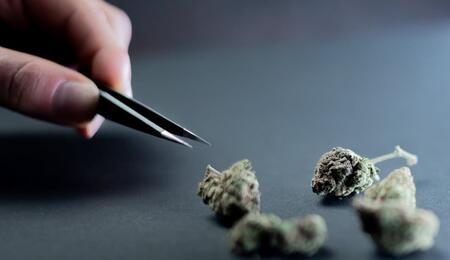
As cannabis legalization expands across the United States, researchers are finding that millions of adults are turning to low-dose THC products as part of a growing microdosing trend.
While the media and popular culture often associate “microdosing” exclusively with Silicon Valley tech bros and psychedelic substances like LSD or psilocybin mushrooms, new data completely flips that narrative on its head.
A breakthrough research from the University of California San Diego (UCSD), published in the American Journal of Preventive Medicine, reveals that cannabis microdosing is actually nearly twice as common in the United States as microdosing with traditional psychedelics.
Microdosing refers to consuming sub-perceptual amounts of psychoactive substances to achieve subtle therapeutic or mood-related effects without experiencing a fully impairing high.
In cannabis, microdosing typically involves taking very small amounts of THC—often between 1 and 5 milligrams—with the goal of achieving mild symptom relief while avoiding noticeable intoxication.
For years, the practice has largely been associated with the psychedelic renaissance and substances such as LSD and psilocybin mushrooms.
However, new research now suggests that cannabis may actually be the most commonly microdosed substance in the United States, with millions more Americans intentionally microdosing cannabinoids than traditional psychedelics.
The findings also highlight a growing tension between widespread public enthusiasm for microdosing and the still-limited body of rigorous clinical evidence surrounding many of its claimed benefits.
Breaking Down the Numbers
The study analyzed data from a highly comprehensive, nationally representative survey of U.S. adults using the Ipsos KnowledgePanel. What the data uncovered came as a surprise to researchers: approximately 9.4% of U.S. adults—representing an estimated 24.1 million people—reported microdosing cannabis at least once in their lifetime.
To put that into context, cannabis microdosing drastically outperformed every major classic psychedelic combined:
- Cannabis: 9.4% lifetime prevalence (~24.1 million adults)
- Psilocybin (Magic Mushrooms): 5.3%
- LSD (“Acid”): 4.8%
- MDMA (“Ecstasy”): 2.2%
The difference becomes even more pronounced when examining current use. Roughly 3.3% of U.S. adults currently microdose cannabis, compared to just 1.0% for psilocybin, 0.6% for LSD, and 0.3% for MDMA.
“Microdosing is often discussed in the context of psychedelics, but what surprised us most was that cannabis microdosing was almost twice as common,” noted Dr. Kevin Yang, a resident physician in the Department of Psychiatry at the UCSD School of Medicine and first author of the study.
Dr. Yang emphasizes that current mainstream medical and cultural dialogues are fundamentally overlooking an immense demographic of low-dose cannabis consumers.
Medical Relief vs. Recreational Control
One of the most intriguing layers of the UCSD research is why people are choosing to microdose specific substances.
The study demonstrated a distinct split in consumer motivation. Individuals microdosing psychedelics like psilocybin, LSD, and MDMA frequently reported doing so for recreational and behavioral reasons—such as seeking a milder, highly managed alternative to an intense trip or attempting to gently boost everyday creativity and workplace performance.
Conversely, cannabis users were more likely to report therapeutic motivations such as managing anxiety, depression, or chronic pain.
“Most proponents of microdosing recommend use under specific protocols that involve taking low doses of LSD or psilocybin for specific health applications,” explained Dr. Eric Leas, assistant professor at the UCSD Herbert Wertheim School of Public Health and senior author of the study.
“That’s not what we found”, he added. “Most people are microdosing for recreational purposes. That suggests that many people could think about the concept of ‘microdosing’ more as a way of lowering dosage. They may just want to take less, so they don’t want to get as high.”
Mental Health and Policy Connection
Across all substances evaluated, individuals experiencing poorer mental health were significantly more likely to seek out microdosing protocols. This conclusion is drawn from consumers self-reporting on their well-being and likelihood of microdosing.
Remarkably, cannabis microdosing was reported by 21% of adults who officially rated their mental health as “poor,” compared to just 8% of individuals who characterized their mental health as “excellent.”
Local public policy may be viewed as a catalyst for these habits. The microdosing of psychedelics was notably higher in municipal jurisdictions that have formally passed decriminalization bills.
The researchers pointed out that as structural drug policies rapidly evolve across the country, it alters not only consumer access to various substances but also a patient’s overall comfort level in accurately reporting their consumption habits to medical researchers.
A Call for More Clinical Trials
Despite the widespread public enthusiasm and widespread anecdotal reports of benefits surrounding microdosing for mental health relief, the UCSD research team concludes with a critical warning for both clinicians and the public: actual double-blind, placebo-controlled scientific data remains incredibly scarce.
Because the market for these substances largely sits in the shadows, except for state-regulated dispensaries, consumers run inherent risks of purchasing adulterated products or miscalculating their intended microdoses.
“There’s a lot of anecdotal enthusiasm around microdosing, especially for mental health,” concluded Dr. Leas. “But we still need rigorous studies to determine whether these perceived benefits are real, who might benefit, and what the potential risks could be.”
As state-level normalization marches onward, tracking these consumption patterns may become increasingly important to public health education, giving clinicians the evidence-based data they need to safely guide patients looking to utilize the power of the sub-perceptual dose.
Read more from Soft Secrets:
- Cannabis and Mood Swings: What to Know
- Why ‘Scromiting’ Is a Growing Health Risk for Heavy Users?
- THC Dosage and Labeling: What to Check When You Buy Cannabis
Disclaimer: The information presented in this article is for journalistic purposes only and does not constitute medical advice. Always consult with a licensed healthcare professional before initiating or adjusting any cannabinoid or therapeutic dosing protocols.
S
Stephen Andrews