Why Missing Cannabis Moisture Standards Are Costing State Markets Millions
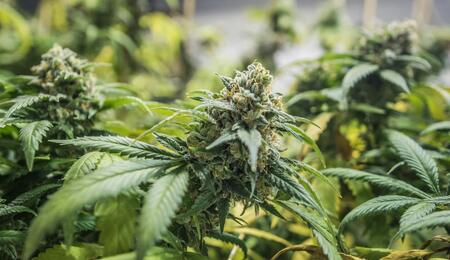
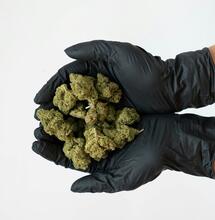
Excessive flower drying below standard water activity benchmarks costs state markets millions in lost sellable weight and tax revenue, according to a new report. Photo by Gio Bartlett on Unsplash
A recently released report from the American Trade Association for Cannabis and Hemp (ATACH), developed in partnership with FTI Consulting, suggests that inconsistent state-level regulations surrounding cannabis moisture and water activity are creating massive, preventable financial losses for legal markets across the United States.
By failing to enforce standardized water activity limits, legal states are unknowingly allowing cultivators to over dry cannabis flower, according to the report. This evaporates sellable weight, cutting into producer revenue and draining millions of dollars in potential tax collections.
“Water activity sounds technical, but the stakes aren’t,” said Chris Lindsey, vice president of policy and state advocacy at ATACH. “Without a consistent standard, consumers get a worse product, patients face avoidable risks, and states leave real money on the table.”
The Hidden Cost of Over-Drying Flower
While cannabis regulations meticulously track potency, heavy metals, and pesticides, water activity often falls into a regulatory blind spot. Water activity is the actual measure of available water that drives microbial safety and shelf stability. Importantly, this measurement differs from total moisture content, which simply measures how much water is present in a product.
To quantify the problem, FTI Consulting analyzed nearly 145,000 independent lab test results across 10 legal states. The findings were unanimous: in every single state, the average sample fell below the 0.55 to 0.65 water activity range established by ASTM International standard D8197. Even more striking, in nine of those 10 states, at least three out of four samples tested at or below the absolute minimum of that recommended benchmark.
When cannabis is excessively dried down to lower water activity levels (such as 0.45 or 0.35 aw), the physical flower loses critical mass. The financial impact of this weight loss compounds quickly across commercial supply chains:
- The Weight Discrepancy: A pound of cannabis flower dried down to 0.45 aw versus an optimal 0.65 aw can lose roughly 18 grams of total weight.
- The Revenue Drain: Because cannabis is sold primarily by weight, this unnecessary shrinkage can directly translate to lower sales revenue for cultivators and processors.
- The Tax Shortfall: State and local governments calculate excise and sales taxes based on final product weight and retail value, meaning a lot of tax dollars virtually evaporate into thin air.
Balancing Safety, Quality, and Compliance
Beyond the macroeconomic impacts on state tax collection, the lack of uniform enforcement exposes structural vulnerabilities in product quality. Water activity acts as a crucial line of defense:
- Microbial Risks: Products exceeding the upper limits of moisture standards face heightened risks of mold, yeast, and pathogens like Aspergillus, which might trigger serious health risks, particularly for immunocompromised patients.
- Quality Degradation: Conversely, over-dried flower strips the product of its natural profile, potentially leading to harsher combustion, a degraded terpene profile, and an inferior experience for the consumer.
A Call for Regulatory Alignment
Industry advocates argue that fixing this inefficiency doesn’t require inventing new science. It simply requires state regulators to adopt and enforce existing federal and national guidelines, such as those outlined by the National Institute of Standards and Technology (NIST) Handbook 130 and ASTM international standards. These guidelines provide an official framework for uniform packaging, legal net weight, and precise testing parameters across the commercial sector.
It may sound insignificant, but it’s not. Ultimately, setting clear moisture standards for cannabis can help protect the entire supply chain. It can contribute to safeguarding product quality, securing fair revenues for cultivators, and ensuring state budgets receive every tax dollar they are owed.
Read more from Soft Secrets:
Disclaimer: Content published on this page is for informational and/or educational purposes only, and it should not replace professional medical or legal advice.
S
Stephen Andrews