Why 2025 Growers Are Betting Everything on LED and Solar Infrastructure
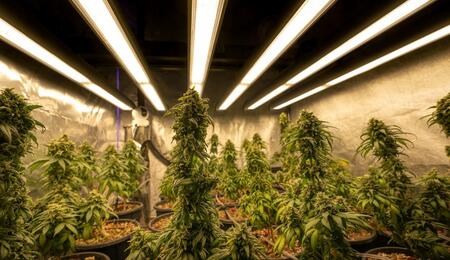
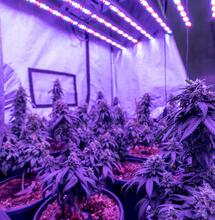
LED grow lights use up to 60% less energy than old school HPS fixtures while producing equal or higher light output, making them the most cost-efficient choice for modern cultivators.
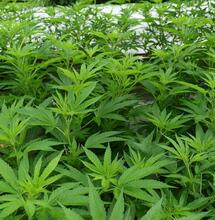
The booming legal cannabis industry in the United States has faced a growing contradiction: even as sales continue climbing to new highs, the sector’s massive carbon footprint has for years been dragging down profits and drawing regulatory scrutiny. Indoor cannabis cultivation, the method preferred by most commercial growers, is estimated to consume around 1% of all electricity used in the U.S. annually—generating emissions equivalent to keeping 10 million cars on the road.
For the average grower, this isn’t just an environmental problem; it’s a financial one. Energy costs can account for up to 50% of the total cost of production, making energy efficiency the single most critical factor for survival in a highly competitive and price-sensitive market. To survive the profit squeeze and secure their future, U.S. growers have been engaged in a rapid, technology-driven pivot toward sustainability, led by the mass adoption of LED lighting and on-site solar power.
The Power Drain: Why Indoor Cannabis Grows Are So Energy Hungry
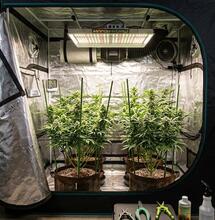
The excessive energy demands of indoor cannabis stem from two primary systems that must operate in concert, 18 to 24 hours a day: lighting and climate control.
- Traditional Lighting (HPS): For decades, the industry standard was the 1,000-watt High-Pressure Sodium (HPS) fixture. While effective, HPS lights are highly inefficient, converting only about 30–35% of their consumed energy into usable light; the remaining 65% is wasted as heat.
- HVAC and Cooling: This massive waste heat must be removed constantly to maintain the ideal canopy temperature (68–78°F). This means that a huge portion of the facility’s power—upwards of 19% of CO2 emissions—is dedicated solely to powering Heating, Ventilation, and Air Conditioning (HVAC) systems. Simply put, growers were spending vast amounts of money on electricity to run lights, and then spending nearly as much again to cool the room down.
From 50% to Full Dominance: LEDs’ Fast Climb to the Top
Roughly four out of every five professional growers now report using LEDs as their main lighting technology in the flowering stage. The remaining HPS usage is often attributed to smaller, budget-conscious growers (due to the lower upfront cost of HPS fixtures) or operations that are simply in the process of a gradual, costly transition to LEDs.
• By 2020, LEDs officially tipped the scales.
That was the year adoption surged past the 50% mark across propagation, veg, and flower—cementing LEDs as the new majority lighting choice for cultivators.
• By 2022, the transition wasn’t just happening—it was complete.
Market data showed 70%+ of commercial growers relying on LEDs in the flowering stage, pushing High-Pressure Sodium fixtures into a clear second place as LEDs became the undisputed industry standard.
Profit Engine: LEDs Transform Every Dollar Spent in the Grow Room
The shift from HPS to LED grow lighting has been the single largest energy-efficiency opportunity for cultivators. Though the initial investment is higher (LED systems can cost 2–4 times more than HPS), the financial Return on Investment (ROI) is impossible to ignore.
- Massive Energy Savings: High-efficiency LED fixtures consume between 30% and 60% less power to deliver the same or higher light output (PAR) compared to 1,000W HPS fixtures.
- Cuts Cooling Costs: Because LEDs emit roughly 40% less radiant heat, the HVAC system—often the second-largest energy consumer—does not have to work nearly as hard. Industry data shows that for every 3 kWh of lighting energy saved, 1 kWh of air conditioning energy is also saved.
- Long-Term Reliability: HPS bulbs need to be replaced annually, incurring recurring bulb and labor costs. High-quality LED fixtures have a lifespan exceeding 50,000 hours, equivalent to over ten years of typical use.
- Quality and Control: Modern LEDs offer spectrum tuning and can enhance cannabinoid/terpene production, making them superior for quality control and yield.
For a hypothetical 10,000 square-foot facility, a conservative analysis shows that switching from HPS to LED technology can yield an ROI in as little as 1.6 years, translating to well over $1.2 million in conservative savings over five years.
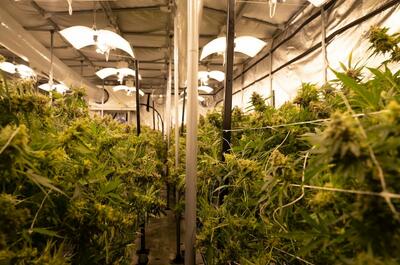
Another difference is that LED grow lights produce far less heat than HPS fixtures, allowing growers to cut both lighting and cooling costs dramatically.
Green Infrastructure: Solar, Storage, and the Regulatory Hammer
The second major trend addressing the carbon footprint is the adoption of renewable energy, particularly solar power and battery storage.
For large-scale cultivators, on-site solar generation—often combined with battery microgrids—provides two major business advantages:
- Predictable Costs: It insulates companies from volatile grid electricity prices and rising utility tariffs.
- Crop Protection: Battery storage provides backup power during grid outages, preventing the catastrophic loss of a high-value crop in a sealed, climate-controlled environment.
Many states are accelerating this adoption through regulation and incentives. In Colorado, where cannabis facilities once accounted for over 2% of Denver’s total electricity use, local governments like Boulder County have imposed energy consumption taxes. Cultivators, such as Terrapin Care Station, are avoiding these fees by offsetting their energy use. Terrapin achieves this by partnering with community solar farms, purchasing up to 10% of the energy produced by installations like Jack’s Solar Garden, which covers approximately 25% of the company’s total energy needs. Companies like Solar Therapeutics in Massachusetts are also investing heavily in solar roofing for their facilities.
The Path to Profit: Navigating Rebates and Federal Support
The high upfront cost of LED and renewable installations is being massively offset by a growing network of utility and government incentives:
- Utility Rebates: Local utility companies across the U.S. offer significant rebates for installing energy-efficient equipment. Many programs, such as PG&E’s in California, offer retroactive rebates of up to $79 per qualifying LED fixture, while Xcel Energy programs offer between $0.80 and $1.00 per watt installed for LEDs. Some states, like Connecticut, even offer up to $0.40 per kWh saved, covering up to 60% of the total project cost.
- Federal Funding (REAP): The U.S. Department of Agriculture’s Rural Energy for America Program (REAP), bolstered by the Inflation Reduction Act, provides grants and loans to rural small businesses, including many cultivators. Grants can reach up to $500,000 for energy efficiency improvements and $1 million for renewable energy systems, covering up to 50% of the project cost. This federal commitment is rapidly accelerating the green transition in agricultural areas.
For the modern US cannabis grower, going green is no longer a matter of corporate social responsibility—it’s a critical financial strategy. As markets mature and price competition intensifies, efficiency measures driven by LED lighting and renewable energy are separating the operations built for the long haul from those that will be left behind by sky-high energy costs.
Read more from Soft Secrets:
S
Stephen Andrews