Advanced Synergy: Improving Indoor Climate and Lighting with CO2
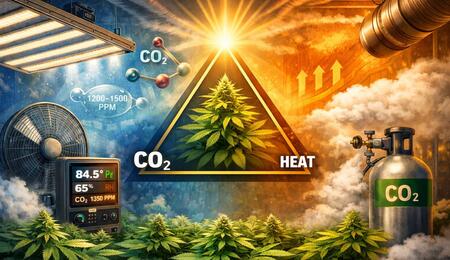
This guide shows how to use LED lights, climate control systems, CO₂ support, and healthy plants in an indoor grow room. To get high-quality yields by 2026, growers should not depend only on buying the strongest light or biggest fan. Good cultivation relies on the “Golden Triangle”: the relationship between light intensity, carbon dioxide (CO₂) levels, and temperature. When these three factors work together, cannabis plants perform better. If one factor is off, it can harm the plant's health. This guide highlights how to master this synergy with advanced products.
The Role of CO₂: The ‘Missing Link’
In a typical grow room, CO₂ levels are around 400 ppm (parts per million). At this level, a plant cannot use much light. Running a strong LED light at full capacity without added CO₂ makes it hard for the plant to use extra energy. This can cause light stress, bleached buds, and slow growth. Adding CO₂ (aiming for 1,200–1,500 ppm) raises the plant’s ability to utilize more light and thrive in higher temperatures.
Phase 1: Using High-Intensity Lighting
Lighting Optimization: To gain the benefits of CO₂, provide a high level of light measured as PPFD (Photosynthetic Photon Flux Density). For serious growers, this means reaching 1,200 to 1,500 µmol/m²/s. Some high-output LED lights can produce full-spectrum “white” light, which helps the lower parts of the plant receive enough energy for photosynthesis. Growers should pick from various commercial LEDs that reach these intensity levels.
Climate Optimization: The main challenge with high-intensity lighting is heat. Even modern LEDs, which are better than old HPS bulbs, still create significant heat. In a CO₂-rich environment, it's best for the room to be warmer (between 82°F and 85°F), but the heat must be even. Using proper air movement helps prevent hot spots and protects leaves from burning while keeping the plant's metabolic rate high.
Phase 2: Understanding VPD (Vapour Pressure Deficit)
Climate Optimization: VPD tells us how much moisture the air can hold, affecting how quickly plants breathe or transpire. In a warm, CO₂-rich room, keeping a VPD of 1.2 to 1.5 kPa during flowering is crucial. Reliable environmental sensors are essential to manage this. Some growers like smart sensors like Pulse Pro, while others choose Sensor Push or similar brands. These sensors help detect when humidity is low. If it gets too dry at 85°F, the plant will close its stomata to save water, which limits CO₂ intake.
Lighting Optimization: The lighting schedule needs to match climate changes carefully. Popular controllers among growers include TrolMaster, AC Infinity, Growflux, and Vivosun. As light intensity increases, the plant requires more water. If the light is at its peak but climate conditions are poor, the plant may experience stress. The light dimming should align with the dehumidifier's ability to manage the added moisture from the plants.
Phase 3: Adding CO₂ and Its Implementation
Climate Optimization: Introducing CO₂ changes how you handle exhaust. When using a standard exhaust fan that runs all the time, it can pull out added CO₂. You can improve this by switching to a closed-loop system or a timed exhaust. CO₂ bags are more of a supplement and suit smaller grow tents. In larger setups, growers often use tank-based CO₂ systems with reliable regulators. Brands like Titan Controls or Autopilot are common. These systems should connect to an environmental controller that turns off CO₂ when the exhaust fan is running.
Lighting Optimization: When CO₂ is flowing, cannabis plants can handle higher light levels. This is when to use the “Boost” setting on LED drivers. Because CO₂ allows the plant to stay healthy in higher temperatures, you can put the lights closer to the plant canopy than in a non-CO₂ setup. This can increase light density (PPFD), which helps create stronger buds. Growers must also monitor the canopy temperature using IR thermometers or leaf temperature sensors. Ideal leaf temperatures are usually between 78–82°F in CO₂-rich rooms.
Phase 4: Enhancing Growth—Soil Amendments and Boosters
Climate Optimization (Nutritional Inputs): When temperatures reach around 85°F for CO₂ enrichment, your growing medium can lose moisture quickly. This may cause a “salt buildup” if you use regular bottled nutrients. To avoid this, experienced growers should use Organic Living Soil with high-quality Biochar or Rice Hulls. These additives help retain moisture and support beneficial microbes that protect the roots from the higher heat needed for the CO₂ strategy.
Lighting Optimization (Plant Needs): At a PPFD of 1,500, plants need more calcium (Ca) and magnesium (Mg). In this case, you can use a Cal-Mg booster or an organic option like Coconut Water Powder, which contains cytokinins, potassium, and enzymes. Adding a silica supplement can help strengthen the cell walls, allowing the plants to stay strong in CO₂-rich conditions and handle higher canopy temperatures.
Growers often choose these supplements from well-known brands like CANNA, Advanced Nutrients, or Botanicare, depending on their preferred methods. Summary: Combining Elements for Success Climate Focus: To succeed in 2026, you need automation, especially for advanced growing setups. An environmental controller can manage fans, humidifiers, and CO₂ injectors together, preventing them from working against each other. Many growers use systems like AC Infinity UIS or Autopilot for this. Lighting & Soil Focus: Remember that light provides energy, while soil acts as a cooling and delivery system. Using high-output LEDs with CO₂ can increase plant activity.
Make sure to use a strong, silica-rich soil structure and a “Living Soil” method to protect the roots in warmer temperatures. When these parts work well together, they can boost secondary metabolites and improve plant quality. Warning: Only use horticultural CO₂ enrichment in well-ventilated areas with a CO₂ safety monitor, as too much carbon dioxide can be harmful to people. This guide is for educational purposes for legal growers; always follow local laws about cannabis cultivation.
More From Soft Secrets:
UV-B Radiation and THC Production in Cannabis
L
Liz Filmer