What Is Vapour Pressure Deficit and Why Is It So Important for Growers?
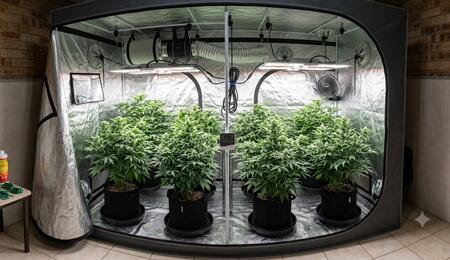
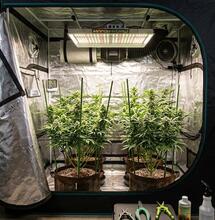
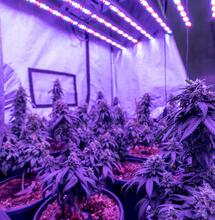
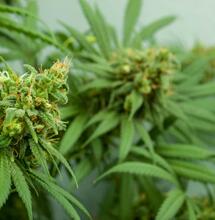
Growing premium-quality indoor cannabis isn't just about choosing the right genetics or nutrients. Creating the perfect growing environment is equally important, and one of the most effective ways to optimise plant health is by understanding Vapour Pressure Deficit (VPD).
For many years, growers relied on simple guidelines such as maintaining temperatures around 24°C with high humidity during the vegetative stage before gradually lowering humidity during flowering. While these recommendations still provide a good starting point, modern cultivation has introduced a far more accurate way of managing the growing environment.
In this article, I will explain in detail all you need to know about VPD. Breaking down what VPD is, why it matters, how to calculate it, recommended VPD ranges for every stage of growth, and practical tips for maintaining the perfect environment.
So What Is Vapour Pressure Deficit (VPD)?
Vapour Pressure Deficit, commonly shortened to VPD, measures the difference between the amount of moisture currently in the air and the maximum amount of moisture the air can hold before becoming saturated.
By monitoring and adjusting VPD, growers can optimize plant transpiration, nutrient uptake, photosynthesis, and overall growth. Whether you're a beginner or an experienced cultivator, understanding VPD can significantly improve plant health, increase yields, and produce more aromatic, resin-rich flowers. For cannabis growers, VPD represents the relationship between:
- Air temperature
- Relative humidity (RH)
- Leaf surface temperature
These three factors determine how easily water evaporates from the plant's leaves through a process called transpiration. Rather than simply aiming for a certain humidity level, VPD helps growers understand how "thirsty" the air is. This provides a much more accurate picture of how your plants are responding to their environment. VPD is measured in kilopascals (kPa) and is one of the most reliable indicators of environmental conditions inside a grow room.
Is VPD Important When Growing Indoor Cannabis?
Cannabis plants constantly move water from their roots through the stem and out of their leaves. This movement transports essential nutrients and minerals while helping regulate leaf temperature. When VPD is within the optimal range, plants can:
- Absorb nutrients more efficiently
- Increase photosynthesis
- Produce stronger root systems
- Develop faster vegetative growth
- Produce larger flowers
- Increase resin and terpene production
- Reduce environmental stress
What Happens When VPD Is Too Low?
- Slow transpiration
- Reduced nutrient uptake
- Calcium deficiencies
- Soft leafy growth
- Increased risk of mould and mildew
- Poor oxygen exchange
Signs the VPD Is Too High?
- Leaf edges curling upwards
- Wilting despite moist soil
- Nutrient burn
- Stunted growth
- Reduced yields
- Lower terpene production
Understanding How Cannabis Transpires
Transpiration is the process where water moves from the roots through the plant before evaporating from tiny pores called stomata, located on the underside of each leaf. A simple comparison is human sweating.
When people become hot, sweat evaporates from the skin, cooling the body. Cannabis plants work in a remarkably similar way. As water evaporates from the leaves, it creates a pulling force that draws fresh water and dissolved nutrients upwards from the roots. Without efficient transpiration, the plant struggles to move nutrients where they're needed most. This continuous cycle supports:
- Nutrient transport
- Cell expansion
- Photosynthesis
- Temperature regulation
- Healthy growth
How Plant Stomata Affect VPD Levels
Stomata are microscopic openings found on the underside of smaller and older cannabis fan leaves. These pores have two important jobs. Releasing water vapour into the air and absorbing carbon dioxide (CO₂) for photosynthesis
- The opening and closing of stomata is directly influenced by VPD.
- If the environment is too humid, stomata remain less active
- If the air is excessively dry, stomata close to prevent dehydration.
- The correct VPD encourages stomata to remain open, allowing maximum CO₂ uptake
How to Measure VPD
It may sound like a complex mathematical equation, however calculating VPD is easier than it sounds! As long as you have the right tools and equipment as highlighted below, you can start doing the calculations at home.
Tools and Equipment Needed
- A digital hygrometer to measure air temperature and relative humidity
- An infrared thermometer to measure leaf surface temperature
- A VPD calculator or VPD chart
VPD = Vapour Pressure (Leaf) − Vapour Pressure (Air)
Simply enter your readings into an online VPD calculator or use a printed VPD chart to instantly determine whether your grow room is within the ideal range, allowing you to adjust your environment accordingly.
Measuring The Leaf Temperature for VPD
One common mistake is assuming air temperature and leaf temperature are identical. In reality, cannabis leaves are often 1–3°C cooler than the surrounding air due to transpiration. This small difference can significantly alter VPD calculations. Using an infrared thermometer provides much more accurate readings and ensures you're targeting the correct environmental conditions.
The Recommended VPD for Each Growth Stage
Seedling Stage = VPD: 0.4–0.8 kPa
- Relative humidity: 70%
- Air temperature: 24°C
- Leaf temperature: 22°C
Vegetative Stage = VPD: 1.0–1.1 kPa
- Relative humidity: 65%
- Air temperature: 24°C
- Leaf temperature: 24°C
Flowering Stage = VPD: 1.2–1.6 kPa
- Relative humidity: 53%
- Air temperature: 24°C
- Leaf temperature: 24°C
Plant Signs and Symptoms: Your VPD Needs Adjusting
Below is a list of signs to watch for that indicate your growing environment is not optimal for the plants. The correct temperature and humidity play a massive role in how well your plants grow.
- Curling leaves
- Wilting
- Slow growth
- Weak stems
- Leaf tip burn
- Pale foliage
- Excessive stretching
- Poor flower development
- Mould or mildew
- Persistent nutrient deficiencies
My Final Thoughts on VPD
I am sure there are plenty of life long growers who have never used a VPD chart as a guide, and have always achieved excellent results. I always tell beginners to keep their lights on at 24 degrees Celsius and do your best to keep the lights off at temperatures of 18-20 degrees Celsius.
Following a VPD chart is well recommended if you are working on a large commercial scale and demand a perfectly grown crop, and to be as efficient as possible as far as resources go. If you do want to take your indoor grow game to another level, then incorporate VPD into the project and learn how to read your plants and their needs in a more advanced manner. Growers who plan to supplement the grow room using carbon dioxide will beenfit greatly from a VPD chart gide.
S
Stoney.Tark