Scientists Uncover Rare Cannabis Leaf Compounds
Cannabis leaves may hold a hidden pharmacological goldmine, new research suggests.
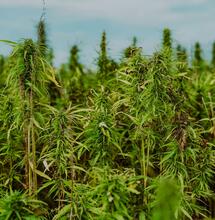
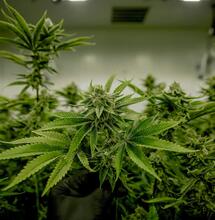
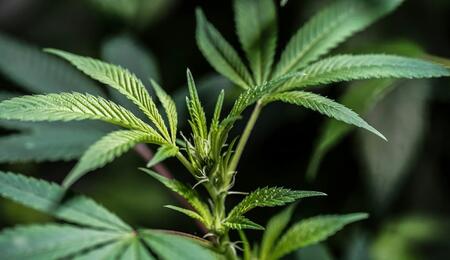
Cannabis leaves have largely been treated as secondary material. For most of the time, they are trimmed away, composted, extracted in bulk, or simply discarded in favor of cannabinoid-rich flowers. But new research from Stellenbosch University suggests those overlooked leaves may contain a surprising chemical treasure trove with untapped biomedical potential.
Scientists analyzing commercially grown cannabis strains discovered dozens of previously undocumented compounds in cannabis leaves, including the first-ever evidence of rare molecules known as flavoalkaloids in the plant.
The findings add another layer of complexity to cannabis chemistry, far beyond THC and CBD.
Scientists Identified 79 Phenolic Compounds in Cannabis
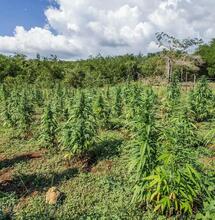
The research team examined three cannabis cultivars grown in South Africa using advanced analytical techniques capable of separating and detecting compounds present in extremely small amounts.
In total, researchers identified 79 phenolic compounds, with 25 compounds never previously reported in cannabis. Among those were 16 compounds tentatively classified as flavoalkaloids—a particularly rare class of naturally occurring molecules.
Phenolic compounds are already highly valued in pharmaceutical and biomedical research because many are associated with antioxidant, anti-inflammatory, and anti-carcinogenic activity.
What surprised researchers most was where the compounds appeared.
The rare flavoalkaloids were concentrated primarily in the leaves of one specific strain rather than the flowers themselves, highlighting how dramatically cannabis chemistry can vary between cultivars.
Cannabis May Be Far More Chemically Complex
According to the researchers, cannabis already contains more than 750 known metabolites, making it one of the chemically richest medicinal plants studied today.
Still, the team did not expect such large differences between only three cultivars.
Dr. Magriet Muller, analytical chemist and lead author of the study, noted that plant phenolics are notoriously difficult to analyze because they appear in tiny concentrations and often possess highly diverse structures.
“Most plants contain highly complex mixtures of phenolic compounds, and while flavonoids occur widely in the plant kingdom, the flavoalkaloids are very rare in nature,” she said, Science Daily reported.
Her team used advanced two-dimensional liquid chromatography combined with high-resolution mass spectrometry to separate the rare leaf compounds.
The findings reinforce a growing scientific realization: cannabis research has historically focused heavily on cannabinoids, while many other potentially bioactive compounds remain poorly characterized.
That includes flavonoids, terpenes, stilbenes, alkaloids, and now potentially flavoalkaloids.
Why Flavoalkaloids Matter
Flavoalkaloids are considered exceptionally rare in nature, and scientists are still trying to understand their biological roles and pharmacological potential.
Because they combine structural features of flavonoids and alkaloids, researchers believe they may exhibit unique biochemical properties not typically seen in either class alone.
It will take further research to determine whether these compounds are medically effective in humans. However, their identification alone marks a significant scientific step forward.
It also reshapes the perception of cannabis leaves—often viewed as low-value byproducts—into potentially novel sources of therapeutic compounds or specialized extracts.
Cannabis Industry May Change How It Views “Waste”
The research could carry broader economic and industry implications as well.
In many cultivation systems, fan leaves and excess leaf material are discarded or processed into low-value biomass. However, the recent discovery suggests certain cultivars may contain chemically valuable compounds in plant parts that have received little commercial attention until now.
The findings may also encourage breeders to select cultivars not only for cannabinoid and terpene content, but for broader phenolic and flavonoid profiles as well.
As cannabis science evolves, the plant increasingly appears less like a simple source of THC or CBD—and more like a chemically dense botanical ecosystem that researchers are only beginning to map.
The full findings were published in the Journal of Chromatography A.
Read more from Soft Secrets:
S
Stephen Andrews