Cannabis in Australia: Updates Across Medicinal & Recreational Legislation
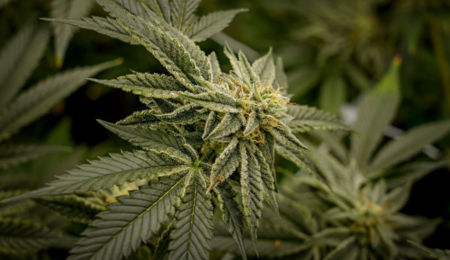
Cannabis legislation trends worldwide have provided some interesting insights into populations across the globe and their perceptions not only of marijuana but also their approach to freedom of healthcare and health and wellness by extension.
Along with a growing number of US states, there are plenty of cannabis-friendly vacation destinations across the world, from Spain to Argentina and even South Africa. But the legalisation of recreational cannabis is still a leap for other nations, the most surprising country yet to legalise being Australia.
It’s hard to say why Australia is hesitant to legalise recreational cannabis nationwide, but looking at the country’s recent revisiting of recreational and medical cannabis legislation may point to a brighter, greener future. Let’s have a closer look.
Is recreational cannabis legal in Australia?
Recreational cannabis is still illegal in Australia. There’s only one state that has decriminalised cannabis and allows for the possession of a small amount of recreational cannabis products.
As of January 31st 2020, adult citizens living in the Australian Capital Territory (ACT) can legally possess up to 50 grams of dried cannabis or up to 150 grams of fresh cannabis, and grow up to two plants per person, with a maximum of 4 plants per household. Australian seed suppliers offer both photoperiod and autoflowering cannabis seeds for personal cultivation to adult ACT residents only.
There are still strict laws surrounding personal cultivation of cannabis plants at home for ACT residents. For instance, plants need to be kept away from children at all times, as it’s still a crime for anyone under the age of 18 to possess, use, or cultivate any amount of cannabis.
Plants must also be grown outdoors on private property (i.e. no plants in community gardens or other public spaces), and must not be visible nor accessible to the public. The strict requirements that plants be cultivated outdoors and without the use of grow lights or hydroponics is also why autoflowering cannabis seeds are generally more in-demand for hobby growers in Australia.
It’s also illegal to sell, share, or gift cannabis (seeds, or dried or fresh plants) to another person. The ACT doesn’t currently have a licensing system in place for cannabis vendors, so any buying or selling activities are still technically illegal and remain a criminal offense.
Is cannabis decriminalised Australia-wide?
Cannabis legislation and penalties for possession are managed by state governments rather than Australia’s federal government. This means that cannabis is decriminalised in some states and territories, but possession of any amount of recreational cannabis is still recognised as a criminal offense in others.
Of Australia’s 8 states and territories, possession of recreational cannabis has been decriminalised in only three, these being:
- Australian Capital Territory (ACT)
- South Australia (SA)
- Northern Territory (NT)
In New South Wales (NSW), Victoria (VIC), Queensland (QLD), Western Australia (WA), and Tasmania (TAS), possession of recreational cannabis is still considered to be a criminal offense, with minimum penalties of fines of up to a few hundred dollars, to heftier four-figure fines and even jail time, depending on the quantity of cannabis found and for trafficking vs. non-trafficking offenses.
In all five of these states where cannabis is still a criminal offense, however, police can exercise discretion to issue a caution or refer the offender to a drug diversion program or cannabis intervention session to avoid a criminal conviction.
Medicinal cannabis prescriptions in Australia
Although recreational cannabis remains illegal and possession is largely still a criminal offense, medicinal cannabis has actually been legal for over a decade now. Medicinal cannabis was legalised at the federal level in 2016 and is regulated by the Office of Drug Control (ODC) and the Therapeutic Goods Administration (TGA).
How to get a medicinal cannabis prescription
Australian citizens can obtain medicinal cannabis products like oils, sprays, capsules, and even medicinal flowers for vaping if prescribed by an authorised doctor or nurse practitioner and for specific medical conditions.
Medicinal cannabis products in Australia also aren’t available through weed dispensaries, in fact Australia has no weed dispensaries. Instead, medicinal cannabis products are available through participating pharmacies.
Restrictions for medicinal cannabis products
The TGA maintains specific criteria for medicinal cannabis products sold in Australia to ensure regulatory compliance. This criteria is outlined in the TGO 93 document (also known as the Therapeutic Goods (Standard for Medicinal Cannabis) Order 2017).
Under the TGO 93, medicinal cannabis products cannot contain:
- Cannabinoids synthesised by chemical conversion
- Synthetic forms of THC like dronabinol and other synthetic cannabinoids
- Active ingredients from any source other than the cannabis plant
Medicinal cannabis products are also not permitted under TGO 93 to be adulterated or mixed with tobacco or any undeclared substances. Instead, all active ingredients and cannabinoids in medicinal cannabis products need to be produced directly from the cannabis plant. This ensures medicinal cannabis products in Australia only use the purest flowers, with no traces of heavy metals, pesticides, or other foreign matter that may affect the health outcomes of the patient consuming that product.
Australia’s road to cannabis decriminalisation has been backed by science
Australia provides a unique cannabis market for more reasons than just its unique journey to recreational legislation. Being a global agricultural super power with an abundance of land, Australia is uniquely positioned to cultivate a strong cannabis market, be it medicinal or a highly regulated recreational market in the future.
Australia has also had a long history with cannabis to date, being one of the first nations to sign the 1925 Geneva Convention on Opium and Other Drugs that recognised cannabis use for medicinal and scientific purposes. Cut to today, and cannabis research continues to be funded by Australian scientific research institutions, with insights from these reports also going on to inform cannabis policies and legislation across other parts of the world, including in Germany, Switzerland, and across greater western Europe.
Will recreational cannabis be legalised in Australia in our lifetime?
Australia’s ongoing hesitancy to legalise recreational cannabis nationwide is surprising on the face of it. After all, the island continent has garnered a global reputation for its laidback beach culture. But then again, so has Thailand and they’ve since backpedaled on legalisation following widespread concerns of under-regulation.
It could be said that Australia’s simply hoping to avoid any similar backpedaling occurring at state or federal levels for their own population. Ultimately, however, the clear cut regulations for the country’s medicinal market accompanied by the steady decriminalisation of the possession of recreational cannabis in select states, speaks to a promising future for recreational cannabis Down Under. Whether or not we’ll see recreational cannabis 100% legalised and decriminalised in Australia in our lifetime is currently hard to say, however.
S
Soft Secrets