Sponsored
The Great Northern Pivot: Mapping the New Frontier of Craft Cultivation
.png)
For decades, the geographical heart of American cannabis was firmly rooted in the Emerald Triangle. The climate of the West Coast provided the blueprint for what we considered "top-shelf" flower. However, as we move through 2026, a seismic shift is occurring. The "Midwest Cannabis Corridor" has emerged as a powerhouse of both genetic innovation and economic growth, proving that the future of the industry isn't just sunny—it’s seasonal.
This transition from a "basement legacy" to a "state-sanctioned" industry in the North has forced a massive evolution in how we view large-scale cultivation. We are no longer just fighting for legalization; we are fighting for the soul of the craft in a market increasingly dominated by industrial "Big Ag" mentalities.
The Rise of the "Micro-Climate" Connoisseur
One of the most fascinating developments in the current market is the rise of region-specific genetics. In the past, growers in the North were forced to adapt West Coast seeds to indoor environments that were often fighting extreme humidity or sub-zero temperatures. Today, breeders are specifically selecting for "Hardy Northern" traits—short-flowering windows and high resin production that can withstand the unique atmospheric pressures of the Great Lakes and the Northern Plains.
This localized approach is creating a new type of consumer. Much like the craft beer movement of the early 2000s, buyers are no longer looking for a "national brand." They are looking for a product that reflects the terroir of their own backyard. According to industry data on cannabis strain evolution, the market is moving toward "chemotypes" over simple names, allowing northern growers to prove the chemical superiority of their indoor-grown harvests.
The Minnesota Blueprint: A Study in Regional Resilience
Perhaps the most significant victory for the North has been the recent legislative maturity in the Gopher State. While other states struggled with over-taxation and "corporate-first" licensing, the rollout of the legal market in the North Star State has prioritized community reinvestment and craft-tier accessibility.
As a result, the standard for a Minnesota dispensary has been set remarkably high. These aren't just retail storefronts; they are becoming community hubs that bridge the gap between legacy wisdom and modern compliance. For the first time, growers who spent years in the "underground" are finding platforms to showcase heirloom genetics that have never been seen on a commercial scale.
However, this growth still operates within a complex legal framework. Despite state-level progress, the industry must still navigate federal regulations regarding controlled substances, which complicates the movement of equipment and biological materials across certain borders. This "Local First" approach is protecting the market from the price compression that decimated the West Coast, keeping the value focused on the quality of the cure rather than just the volume of the harvest.
Engineering the "Perfect" Indoor Ecosystem
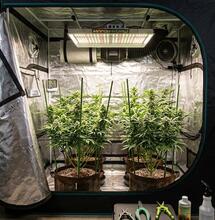
Because the Northern climate is unforgiving, the tech stack of the modern grower has had to become surgical. We are seeing a move away from traditional HPS (High-Pressure Sodium) lighting toward hyper-tunable LED arrays that allow growers to mimic the specific spectrum of a Mediterranean autumn or a Hindu Kush summer with the touch of a button.
- VPD (Vapor Pressure Deficit) Mastery: In the North, managing the relationship between temperature and humidity is a 24/7 battle. Automated environmental controllers are now using AI to predict weather shifts, adjusting dehumidification cycles before the external storm even hits.
- Living Soil at Scale: The "No-Till" movement is making a massive comeback in the Midwest. Large-scale facilities are realizing that the most complex flavor profiles come from diverse microbial life in the soil, not just bottled nutrients.
- Pheno-Hunting in the Digital Age: Software is now allowing multiple facilities across the state to share data on specific phenotypes, accelerating the search for the "perfect" northern-adapted strain.
The "White Market" vs. the "Legacy Soul"
As Soft Secrets readers know, the greatest fear of any legal shift is the loss of the "culture." When the suits move in, the soul often moves out. However, the current trend in the Midwest suggests a different outcome. Because many of the new legal licenses are being granted to those with deep roots in the legacy community, the "White Market" is actually being used to preserve rare genetics that were once at risk of extinction.
We are seeing "Small Batch" designations becoming the most sought-after labels on the shelf. The consumer is willing to pay a premium for a product that was hand-trimmed, long-cured, and grown in a facility where the head grower still touches the plants every single day. This dedication to the craft is essential for maintaining the botanical integrity of the plant as it moves from clandestine basements to regulated labs.
Summary: The Horizon of the North
The story of cannabis in 2026 is no longer about "stopping prohibition." That battle is largely won. The new story is about identity. Whether it’s a craft-focused facility in the suburbs of Minneapolis or a solar-powered greenhouse in rural Michigan, the North is defining a new standard for what it means to be a "cannabis professional."
The industry is maturing, and with that maturity comes a responsibility to protect the plant from becoming a mere commodity. By supporting regional markets and demanding transparency in cultivation, we ensure that the "Northern Lights" of the future are brighter—and higher quality—than ever before.
S
Soft Secrets