Common Mistakes When Using Indoor Grow Lights
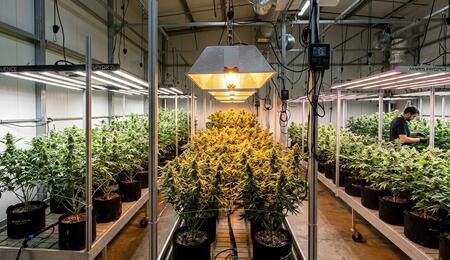
Indoor cannabis grow lights have evolved massively over the last 20 years, with a wide range of different lighting options available. If you are new to growing cannabis and have purchased your first grow light, then this article will highlight all of the most common mistakes that growers make when using indoor lights.
Too Much Light Intensity
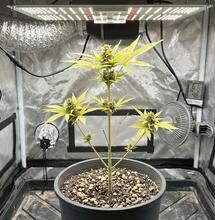
The first mistake that is extremely easy to make with cannabis grow lights is giving plants too much light. Plants require photosynthetically active radiation (PAR) in order to grow and develop into large, frosty flowering plants. In the old days, the brightness value played a big role in determining whether a grow light was powerful and would work better than another bulb.
Lumens was the key value; however, nowadays, PAR is the most important detail and allows you to calculate the PPF and PPFD levels of light your plants will absorb. Some LED grow lights these days have the capacity to produce 1500+ µmol/s, which is excessively high for indoor cannabis, and using a dimmer can allow you to lower the intensity, electricity usage and heat output.
- 150–300 µmol/s for seedlings and clones (18/6)
- 400–600 µmol/s for vegetation (18/6)
- 600–1000 µmol/s for flowering (12/12)
Too Little Light Intensity
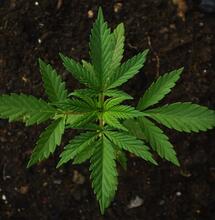
When you give your plants too little light, they will respond by putting all of their energy into growing as tall and lanky as possible. They do this to increase their chances of absorbing more light, which is why overcrowded seedlings can often begin to compete for light and grow bigger than desired.
Seedlings that are kept too far away from the light will become thin, weak, lanky and may even topple over the side of the pot. You can increase light intensity by either keeping your light within 12–18 inches above the canopy or increasing the power output using a dimmable LED model.
- LED or CFL strip lights are ideal for seedlings and clones
- If using metal halide or HPS lights, it is best to use 600W+
- Check that the light produces an even spectrum to support growth
Light Burn
When I first heard about light burns almost 20 years ago, I did not think it was even possible, but yes, cannabis plants can receive too much light. Rather than go into beast mode and develop into the size of a small tree, they actually slow their growth down and become stunted.
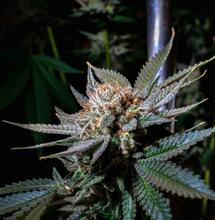
You can spot a cannabis plant that is suffering from light burn due to the fact that the top 2–3 nodes of growth have turned yellow, the upper canopy foliage has become dry and brittle, and the buds are turning albino white. Light burn and heat stress are most common during the flowering period when growers keep their lights too close under the impression that the more light, the better!
- Bleached white buds will have no aroma or essence and should be cut away
- Raising grow lights by 18–24 inches will resolve the issue
- Poor airflow, hot temperatures and light burn combined cause stress
Hot and Dry Grow Rooms
Cannabis plants love consistency, and as a grower, it is your responsibility to provide your plants with a stress-free life. The flowering stage is when your plants are focusing all their energy on trichome, terpene and bud production, so maintaining the optimal environment at this stage is the pinnacle of a successful harvest.
One common mistake that growers make is keeping hot grow lights too close to the canopy. As a result, the air between the plants and the lights, as well as around the tops of the plants, becomes dry, warm and uncomfortable for flowering plants. You can easily spot a plant that is growing in a hot and dry space, as the leaves will begin to curl inwards or droop downwards.
- Oscillating fans should provide a cool and fresh air current above the plants
- The temperature and humidity should remain at 24 degrees Celsius and 40–50%
- Use a digital hygrometer to check the temperature and humidity 24/7
Low-Intensity Lights
Low-intensity lights are great for seedlings, clones and small vegetation tents; however, when it comes to the flowering period, you need a powerful grow light. Compact fluorescent and low-powered LED lights will not suffice for optimal bud production and big yields. Using an HPS that is less than 400W of power will be a waste of time for flowering plants, and you should only use a 600–1000W HPS if you are serious about growing big plants.
I would recommend using LED cannabis grow lights because they are energy-efficient, provide a well-balanced full spectrum for the vegetative and flowering periods, and produce very little heat. LED grow lights are also dimmable, meaning you can produce the perfect amount of PAR for your plants without needing to go past 50–75% power.
- LED grow lights allow you to fine-tune how much PAR your plants receive
- Only use a 600–1000W HPS for flowering indoor cannabis for the best results
- Undercanopy lights are an excellent way to increase light intensity and spread
Undercanopy Lights
If you are like the millions of other growers on the planet who hate harvesting and trimming the lower half of your plants, with their small-sized and leafy buds, then undercanopy lighting is for you! In recent years, undercanopy lighting has allowed growers to produce uniform, chunky and frosty lower buds without using large amounts of extra electricity.
Commercial-scale facilities have seen many benefits from incorporating undercanopy lights into their facilities. I would encourage you to research undercanopy lighting if you are new to the topic and check out what others think and the results they are getting before investing.
- Undercanopy lights can be used at full power from week 3 of 12/12
- Small-sized grow rooms only need to use 180–270W of extra power
- Buds are uniform and dense at the tops and bottoms of the plants
The Conclusion
All you need to know is that cannabis plants require specific levels of light intensity during their lifecycle. Once you have an awareness of how much PPF your grow room produces, you can lower the power output using a dimmer, or increase or decrease the distance between the canopy and the light.
Fresh air currents created by multiple oscillating fans will help you maintain a cooler temperature and prevent heat stress, hot and dry air and preserve those precious terpenes. I like to lower my temperature down to 22 degrees Celsius during the last 5 weeks of 12/12. Have a play and see what works best for you and always pay close attention to your plants as they will tell you everything you will need to know!
S
Soft Secrets