Grow Room Automation: The Risks of Getting Lazy in Cannabis Cultivation
Everyone loves an easy life. For example, I can barely even gather the energy required to scratch my own balls anymore and generally sit there awkwardly shuffling myself against a coarse section of my underpants, rather than spending the extra energy in engaging my arms and hands.
Mostly, this course of action gets me through the immediate problems of the unwanted itch. However, losing the close contact of my probing fingers against my sweaty nut-sack, also loses me the chance of a closer inspection of the root problem of the issue.
Perhaps an unseen tick burrowing its way into my wrinkled flesh. Mayhaps an unnoticed cyst gaining mass before a timely self-evacuation. Potentially a flesh-eating bacteria contracted on the last weekend I blacked-out on. Testicular warning signs of many a problem can go unnoticed without frequent close attention.
The pitfalls involved in automating something as simple as tending to your own junk should give pause for thought when you are looking to gain freedom from even larger tasks - much like interactions within your grow room.
Should You Automate Your Cannabis Grow Room?
Putting the Devils advocate card down for a second, of course there is a need for automating certain things as much as possible. The need becomes greater the larger scale of grow you are looking at but even for the small home-grower, automation of certain tasks can be a life-saver in the long run.
It is usually the extent to which a process is automated – when it is pushed to an extreme - whereby something goes awry. Used wisely automation can of course go very right, and you will get maximum reward for minimum effort, like a transgender man winning a woman's Olympic event. Used incorrectly and it can go very wrong, like the robotic takeover as predicted in ´The Matrix´.
Automated Nutrient Dosing Systems: What Can Go Wrong?
Dosing systems can be great. Hook it all up to your reservoir and nutrient concentrates, set the numbers you want your EC and pH to be and, Bingo – automatic fertigation. Fill up your res, press some buttons, then forget about it for as long as possible – perfect. What could possibly go wrong?
Mechanical Errors in EC and pH Sensors
Firstly, mechanical errors. Sensors can sometimes drift, or may have been incorrectly calibrated. Even a small cumulative drift over a consecutive period of days can quickly build into an issue whereby you are well outside your desired pH and/or EC range.
Human Errors in Nutrient Mixing
Secondly, human error. In spite of being the keenest of gardeners with the best of intentions, people will always make a mistake at some point (except me, I´m prefect). Adding pH up to the pH down barrel or say, not calibrating measuring equipment properly so any reading you work from is questionable.
Changing Plant Growth Habits and Nutrient Demand
Thirdly, a plants growth habits. Over the period of a week (or two) a plant´s nutrient demand (and its influence over the substrates pH) can change drastically. Without adapting your reservoir to this change in demand, your plants may well become less than satisfied.
Automatic Irrigation and Timed Watering Systems
Timed irrigation pulses can save you from the daily task of leaning through your grow room with a watering can and snapping some branches as you aim for each pot. Even better, moisture sensing probes that irrigate as and when a substrate demands it, remove the age old query of exactly when to water. While freeing up your spare time, it could however leave you wide open to:
Mechanical Errors: Timer and Probe Failures
Timers can fail; your delicately timed programs gone to waste. A moisture probe may also fail but also, that one pot you have the sensor in may not be representing the entire crop. So while one plant is watered well, others may be either under-watered or over-watered. Lastly, dripper blockages gone un-noticed can end up in total failure.
Human Errors: Programming Mistakes and Floods
Digital timers can be a bit fiddly sometimes to program. Getting it wrong means poor watering for your plants. Maybe you didn´t set up a siphon point along the drip line and you just flooded 500L through the ceiling of your Nan´s kitchen. The possibilities are endless.
Plant Growth Habits: Shifting Water Demands
As a plant grows it needs more water, especially important for growers using smaller volumes of substrates in an effort for harder crop steering. Over the period of a week, the demands will change significantly requiring you to adapt, or lose yield.
Grow Room Environmental Control and Automation
Controlling the environment in your grow is arguable the single most important thing to do correctly. Automation of this aspect in a grow room is usually par for the course EG: no-one is going to stand around all day turning the knob on a fan speed controller to keep the temperature stable, unless they just really like knobs. However, time and effort must always be spent considering the three usual suspects:
Mechanical Errors: Drifting Probes and Equipment Failure
Things like incorrectly calibrated/drifting probes, unseen de-humidification failures, limescale blocakages on ceramic disc humidifiers, can all occasionally rear their ugly head and cause issue. Regular checks of all these aspects is required to your precise settings are adhered to.
Human Errors: Poor Probe Placement and Micro-Climates
The weakest of all links, the human hand. Maybe they put the probes in incorrect areas, maybe the fans/humidifiers were placed where they created un-even micro-climates. Maybe the hands didn´t do anything because they were too preoccupied rolling spliffs. Idle hands are the Devil´s workshop.
Plant Growth Habits: Changing Climate Needs
Plants grow, probes stay in one place. All of a sudden your readings aren´t representative of your target grow area and optimisation suffers. Though even with probes in the right place, plants require changing conditions throughout their life-cycle. Adapting your room to these changes in a timely manner can be crucial.
Why Automated Grows Still Need the Gardener’s Touch
Despite all the finer detailed things (like the above) that can directly go wrong due to (a growers negligence of) over-automisation, one of the key things that cannot be replaced is simply regular plant contact. Closely checking and inspecting your plants regularly means you will be able to spot, and respond to, issues a lot faster. You will learn to read your plants much closer and realise to a much higher degree, what is required to achieve a ´perfect´ harvest.
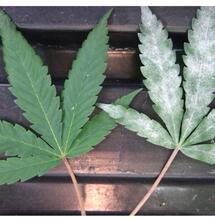
If you leave five days or a week between visiting your grow because your army of robots has it covered, what happens when powdery mildew runs rampant in between visits? How would you feel only noticing that spidermite infestation at week 3 of flower? Automation brings many positives with it, but those positives should not be used at the expense of your harvest, but rather to be able to spend that time to enhance it further.
So what is the overall message here?
Essentially, it is:
´Stop being such a lazy good-for-nothing blaggard that views automisation as a way to go and play more Call of Duty.´
although, a more poetic and less accusational version would be like:
¨The best fertiliser is the gardeners shadow¨.
However, don´t take this literally. You cant just stand over your plants whilst doing nothing, checking your watch every ten minutes waiting for harvest time. The sentiment also implies that you are doing something, whilst casting the shadow.
Written by Charles Chillington
S
Soft Secrets