What Is GPR55? The “CB3” Cannabinoid Receptor Explained
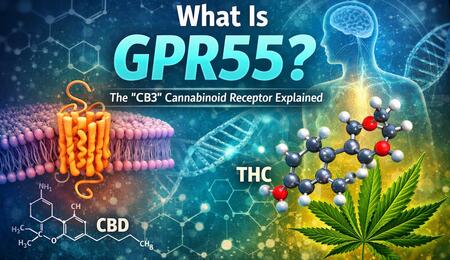
GPR55 is often referred to as the “CB3” cannabinoid receptor, though this term is not officially recognised in the scientific community. Researchers have primarily focused on two main receptors, CB1 and CB2, which mediate the effects of cannabinoids like THC and CBD. However, discoveries have revealed additional receptors, including GPR55, that contribute to the diverse effects of cannabis.
Understanding GPR55
GPR55, or G protein-coupled receptor 55, was discovered in the early 2000s. Unlike the well-established cannabinoid receptors CB1 and CB2, GPR55 is considered a cannabinoid-responsive receptor, meaning it can interact with cannabinoids without being part of the traditional endocannabinoid system.
GPR55 is present in various tissues, including the brain, gut, and bones. Researchers are still investigating its natural activators, with one known compound being lysophosphatidylinositol (LPI).
How Does GPR55 Interact with Cannabinoids?
- CBD: Cannabidiol (CBD) appears to block GPR55, which may help reduce inflammation, affect blood pressure, and influence bone health. However, most of this research is still in its early stages and lacks sufficient clinical evidence from human studies.
- THC and Other Cannabinoids: THC interacts with GPR55, but its primary effects are mediated through CB1 and CB2. Other cannabinoids may also influence GPR55, but the exact impact can vary based on dosage and specific tissues in the body.
Potential Medical Significance of GPR55
Research suggests that GPR55 may play a role in:
- Cancer: It is found at higher levels in certain cancer cells, and preliminary studies indicate that blocking GPR55 could slow tumour growth.
- Inflammation and Pain: GPR55 is involved in pain signalling and inflammation, suggesting its potential in developing non-opioid pain relief options.
- Bone Health: GPR55 is thought to help balance bone formation and loss, and inhibiting its activity might assist in preventing conditions like osteoporosis.
Conclusion
GPR55 exemplifies the evolving landscape of cannabinoid research that extends beyond just CB1 and CB2. While much remains to be learned about this receptor, its potential implications for health and medicine are significant and worth further exploration.
More From Soft Secrets:
The Unique Compounds of Cannabis
L
Liz Filmer