Japanese Wasabi, Grown Indoors in Austria: One of Europe’s Most Unique Indoor Crops
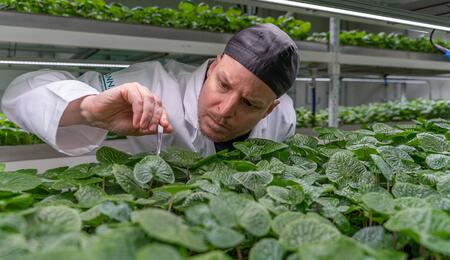
Hidden between the mountains in the south of Austria, something is happening that you would sooner expect to find in a Japanese valley than inside a high-tech indoor farm. Martin and Eszter are cultivating fresh wasabi there. Not in muddy mountain streams, but in a fully controlled indoor hydroponic system.
And that is remarkably unique. Because wasabi is widely known as one of the most difficult crops in the world to cultivate successfully.
While many speciality crops are steadily making their way into greenhouses and indoor farms, real wasabi remains an outsider. In nature, the plant grows only under highly specific conditions: cool flowing water, stable temperatures, high humidity, and above all, almost zero room for error. That is exactly why commercial wasabi cultivation fails so often.
Recreating a Japanese Mountain Stream Indoors
To recreate those natural conditions, Martin and Eszter developed their own floating recirculating system. Within this setup, temperature, water quality, and nutrition are constantly monitored and adjusted.
The plants begin as in vitro cultures imported directly from Japan. They then grow for several months until the rhizomes become strong enough for harvesting. Part of the plant always remains intact, allowing fresh growth to continue immediately. This makes it possible to harvest again every five to six weeks.
Everything takes place indoors: cultivation, harvesting, processing, and packaging.
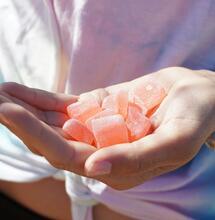
The fresh wasabi is ultimately transformed into powders and pastes for restaurants, food companies, and even sports and wellness products. Demand for high-quality European-grown wasabi is increasing rapidly, especially as chefs continue searching for authentic wasabi instead of the familiar green horseradish paste commonly sold under the same name.
_11zon.jpg)
Precision, Stability, and Total Control
According to Martin, successful wasabi cultivation revolves around one thing above all else: stability. Even small fluctuations in water quality or nutrient balance can immediately create problems. That is why they rely on a recirculating hydroponic system where consistency and precision are central.
For nutrition, they eventually chose products from the Aqua line by CANNA, supplemented with products such as CANNA CALMAG AGENT and CANNA RHIZOTONIC. According to the growers, the stability of the nutrient solution within recirculating systems proved to be a decisive factor.
The entire facility also operates largely on solar energy. Particularly impressive considering the whole operation is managed by a team of just six employees.
Indoor Farming Is Becoming More Specialised
The indoor cultivation of wasabi shows how rapidly controlled environment agriculture continues to evolve. Where indoor farming once focused mainly on lettuce and herbs, attention is increasingly shifting toward exclusive speciality crops with high market value.
And it is precisely these highly sensitive crops, which are difficult to grow consistently outdoors, that appear perfectly suited to fully controlled cultivation systems.
There is something fascinating about the idea itself: a plant traditionally found in cold Japanese mountain streams now thriving inside an Austrian indoor facility surrounded by pumps, sensors, and floating cultivation beds.
Perhaps the future of indoor farming is not simply about becoming larger. Perhaps it becomes far more interesting when it becomes more specialised.
Visiting the largest indoor Wasabi farm in Europe - PhytoniQ & CANNA
S
Soft Secrets