Growing in Thailand: An Interview
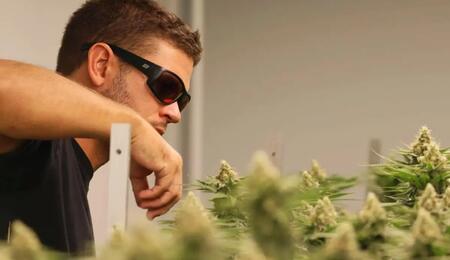
Sof is a former plumber who began growing cannabis between 2012 and 2014 at a social club in Belgium before moving to the thriving scene in Barcelona. In 2022, he relocated to Koh Samui, Thailand, driven by a passion for diving and an opportunity to leverage his experience following changes in the country's regulations.
Sof established Jungle Haze Farm on Koh Samui and now supplies dozens of shops across Thailand, in addition to designing a new grow room in Bangkok. In this interview, he discusses the evolution of the industry after 2022, the importance of lab testing, and how professionalism is essential for survival in the "Wild West" of the Thai market.
**SS:** Sof, where are you from, and how did you begin your journey in cannabis?
**Sof:** I originally worked as a plumber in Belgium, but from 2012 to 2014, I grew for a cannabis social club I founded called Trektuplant (a Flemish pun meaning "grow your own plant"). Unfortunately, that experience ended badly legally, and Belgium has since become very restrictive regarding cannabis.
**SS:** Then you moved to Barcelona. Why there?
**Sof:** I relocated to Barcelona in 2014 during the social club boom. The clubs were tolerated and made sense for those interested in growing. I later returned to Belgium, started growing again, but was convicted and had to stop.
**SS:** How did you end up in Koh Samui?
**Sof:** I moved here in May 2022 for the diving and the atmosphere. After meeting my current Thai girlfriend, I observed the hectic pace of the tourism industry, and we decided to build something together. When the regulatory framework changed, I recognised this as our opportunity.
**SS:** How would you describe what happened in Thailand in 2022? Was it true legalisation?
**Sof:** No, it wasn't legalisation. Thailand simply removed cannabis from the list of narcotics. There's a significant difference: the inflorescence isn't considered a drug, but extracts exceeding 0.2% THC remain illegal. There's still a lot of confusion, and the market often feels like the "Wild West."
**SS:** When did you start Jungle Haze, and what was your biggest challenge?
**Sof:** I established Jungle Haze in January 2023 after acquiring an abandoned mattress factory. The toughest part was the lack of infrastructure; nobody knew how to build a high-tech indoor farm. I had to design everything myself and import the necessary equipment.
**SS:** What is the foundation of your professional irrigation system?
**Sof:** It's all about environmental control and consistency. We use reverse osmosis (RO) water, precise fertiliser dosers, and daily monitoring of electrical conductivity (EC) and pH levels of the exhaust. This method is consistent with what top American growers use. We utilise rock wool and high-frequency irrigation to maintain a stable root zone and prevent the salts from burning the plants.
**SS:** Why do you place such a strong emphasis on lab testing and Good Cultivation Practices (GCP) standards?
**Sof:** If you're a GCP-compliant farm, testing is mandatory for every batch. Some stores advertise "30% THC" on their menus without proof, while serious testing shows actual values ranging from 20% to 26%. However, quality isn't solely about THC; it's about terpenes, purity, and the processing of the flower.
**SS:** How do you manage your genetics since you can't legally import clones?
**Sof:** Importing clones is illegal, so we work with seeds, trusted contacts, and tissue cultures. I have my own clone bank, although I lost everything to a virus in the past and had to start from scratch.
**SS:** What is your harvesting and processing process?
**Sof:** We aim for about 100 grams of dry matter per plant. We dry the flowers slowly for 14 days at 16-17°C with controlled humidity. Trimming is done strictly by hand for large buds to preserve terpenes, while we use machines for smaller flowers intended for pre-rolls.
**SS:** The Thai market has changed significantly. What are your thoughts on the price collapse?
**Sof:** The wholesale price has dropped from 150-300 baht per gram to 30-90 baht. This is a correction phase due to oversupply. In the long run, many inexperienced operators will exit the market. Regulatory uncertainty is frustrating, but we continue to focus on quality.
**SS:** What are your upcoming projects?
**Sof:** We are opening a new farm in Bangkok focused on exports to the European medical market, especially Germany, by 2026. It will be a more precise facility, equipped with advanced sensors and a more sophisticated approach
More From Soft Secrets:
"King of Cannabis" Becomes Thai Prime Minister
Changes to Cannabis Laws in Thailand
L
Liz Filmer