What is HHC, And How is It Made?
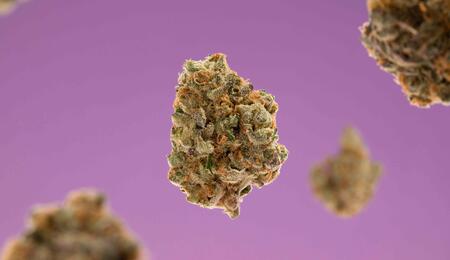
The rise of hexahydrocannabinol (HHC) in the European market has brought a surge of products that, in many cases, remain a mystery to consumers. Unlike traditional cannabinoids, which are extracted directly from the plant's trichomes, HHC is a semi-synthetic cannabinoid (SSC). This means that its origin is not nature itself, but rather a chemical transformation in the laboratory that uses CBD (extracted from industrial hemp) as its main raw material.
The Foundation: CBD as a Precursor
Industrial hemp, rich in CBD and low in THC, is the cornerstone of this market. Due to its abundance and less restrictive legal status in many jurisdictions, CBD has become an efficient precursor for the mass production of HHC.
The Transformation Process
The synthesis of HHC is a sequential, two-stage process that requires precise technical control:
Intramolecular Cyclisation (from CBD to THC)
CBD is an open-chain (bicyclic) molecule. To convert it into a compound with cannabinomimetic potential, chemists must modify its structure through an acid-catalysed intramolecular cyclisation reaction at elevated temperatures.
The Mechanism: When CBD is subjected to the action of acid catalysts (such as phosphoric acid or p-toluenesulfonic acid), the molecule folds and forms a third ring (the pyran ring).
The Result: An isomeric mixture is obtained where Delta8-THC predominates (due to its greater thermodynamic stability), and a variable proportion of Delta9-THC is present. This mixture is the essential intermediate step before obtaining HHC.
Catalytic Hydrogenation (the creation of HHC)
The resulting THC is a molecule that retains chemical double bonds, making it susceptible to degradation by oxygen, light, and heat (transforming into CBN, an inactive compound). Hydrogenation is the process that stabilises the structure:
The reaction: Hydrogen gas (H2) is added to the mixture in the presence of metallic catalysts such as palladium on carbon (Pd/C) or platinum oxide (Adams catalyst). These metals act as facilitators, breaking the double bonds and allowing hydrogen atoms to attach to the molecule.
Molecular stability: By saturating the bonds with hydrogen, the compound becomes HHC. This is essentially a hydrated version and much more resistant to ageing than the original THC.
The key factor: the potency of the (9R) and (9S) epimers
This is the most technical and relevant point for understanding the quality of the final product. Hydrogenation generates two geometric forms called epimers, which are chemically identical in mass but differ in their spatial arrangement:
(9R)-HHC (or 9β-HHC): This is the active form. Its geometry allows for optimal binding to the CB1 cannabinoid receptors in the human body, replicating effects similar to those of THC.
(9S)-HHC (or 9α-HHC): This is the inactive form (or one with reduced biological activity). Its methyl group projects in a way that prevents it from effectively binding to the receptors.
Laboratory Variability
The final ratio between these two epimers depends strictly on the catalyst and temperature used. A product may contain 50% total HHC, but if the majority is the inactive isomer (9S), its potency will be disappointing for the user. This is the main reason why batches from different manufacturers can have such disparate effects.
Safety and Control Considerations
The chemical synthesis process is efficient, but it carries inherent risks if not performed under pharmaceutical standards:
Contaminants: Residues of the acids used in cyclisation or traces of heavy metals from the catalysts may remain in the final product if rigorous technical purification is not performed.
Toxicology: To date, the EMCDDA report emphasises that the pharmacology and toxicology of HHC in humans have not been studied. Any consumption of semi-synthetic products implies exposure to compounds whose long-term effects are not yet known.
Frequently Asked Questions (FAQ)
Does HHC show up on a drug test?
Due to its structural similarity to THC, there is a high probability that urine or saliva tests will produce a false positive.
Is HHC the same as CBD?
No. While CBD is a naturally occurring, non-psychoactive cannabinoid, HHC is a semi-synthetic compound that binds to CB1 receptors in the brain, producing psychoactive effects similar to (though not identical to) THC.
Is HHC 100% natural?
No. HHC is found in trace amounts in the plant, but the product that reaches consumers is produced on an industrial scale by hydrogenating CBD in a laboratory.
More From Soft Secrets:
Hemp-Derived Cannabinoids and Synthetic Cannabinoids Explained
L
Liz Filmer